
NO. 01 · TWO GROUNDS
Eating Design
Preservation, worn as decoration.
I · GROUND
Terracotta and white marble hold the same bloom, and eating design begins with the ground long before the first reach. Warmth leads. Brought so near that its rim leaves the frame, the plate stops reading as a plate. What remains carries traces of the earth it was fired from. Marble withdraws every degree of that warmth. Against it, the crisp almost disappears, and the bloom stands alone. One bite, unchanged, carries two temperaments.
II · FORM
Culinary art direction keeps the flower at a distance from nature. Pickled carrot is cut so that petals stay thick and edges blunt. Its outline sits closer to a drawn sign than to a living thing. Recognition comes at once; certainty takes a second look. Yellow mustard seed, fermented, holds the centre. Pickling and fermenting, methods of keeping that usually live behind glass, are worn openly as Preserved Ornament.
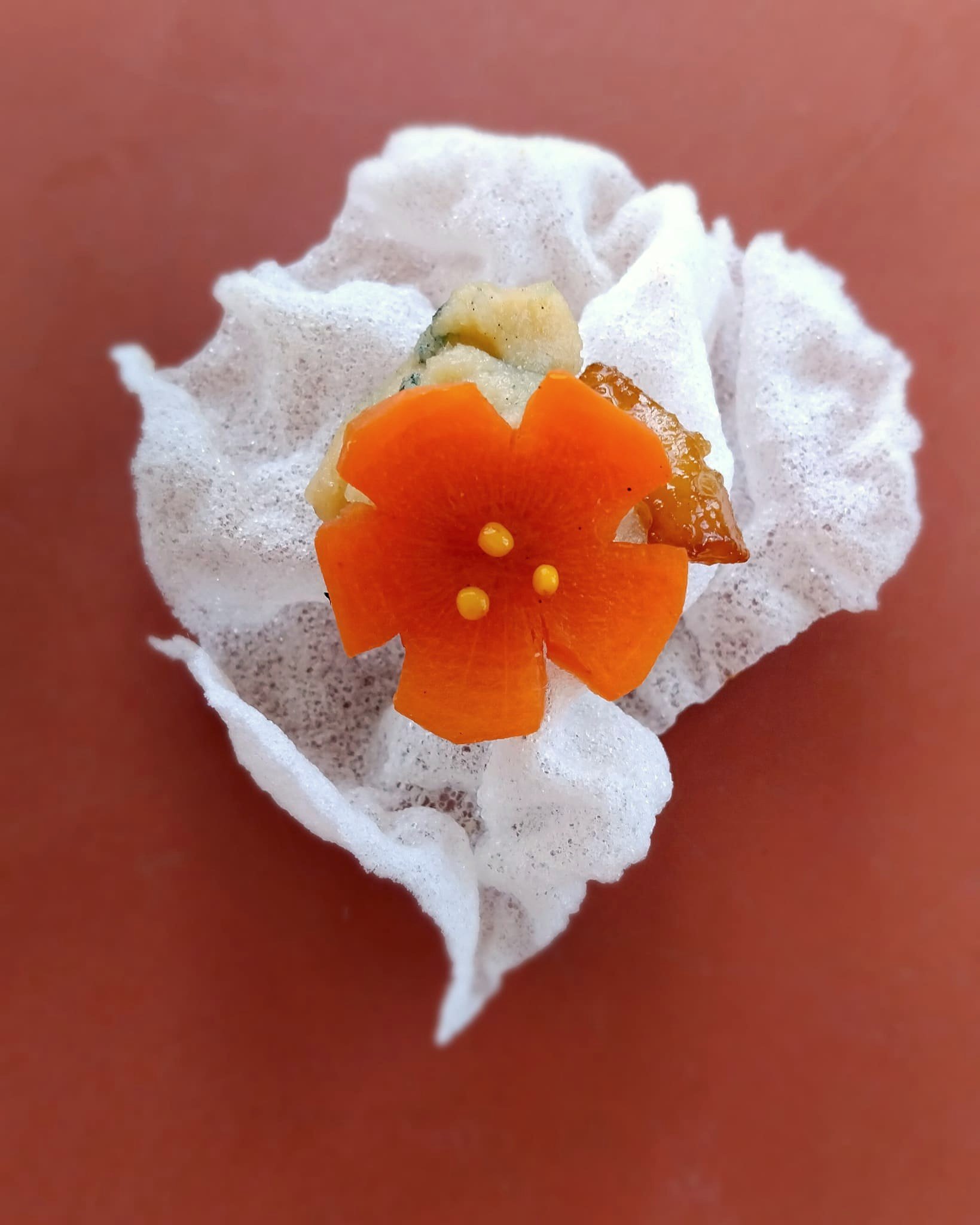
TERRACOTTA
FIRST GROUND
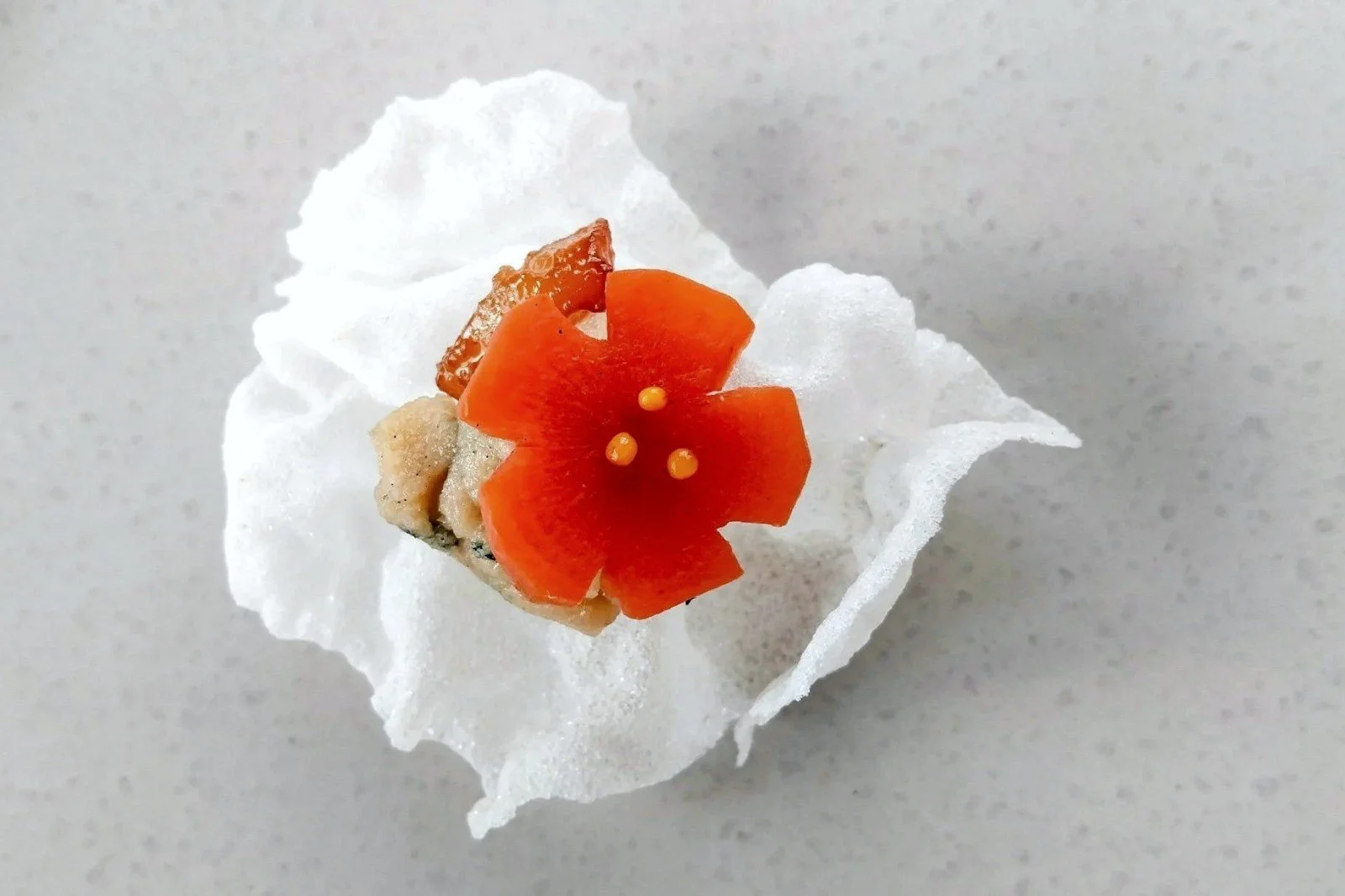
MARBLE
SECOND GROUND
III · SEQUENCE
Rice paper is crisped, then broken by hand into pieces sized for a single reach. No edge is cut, and none repeats. Beneath the bloom, taste is built in layers. Cream arrives before the sourness of the ferment, sweetness follows slowly, and the dry break of the crisp closes the sequence. Each layer holds until the one above gives way. Multisensory by construction, the bite is assembled from the top down, as a section is drawn.
IV · DISTANCE
Made outside any commission, the piece is carried out of doors and eaten where it arrives. Without cutlery, it becomes a quiet study in eating design. Seen from a step away, colour is all that registers; in the hand, the broken edge and the seed take over. Immersive rooms elsewhere in the practice work at the opposite end of scale. Among the edible art creations kept in sequence, this entry asks how narrow a frame can become. Somewhere below that limit, a food design studio would lose its hold on structure. At arm’s length, eating design leaves nothing undecided.