CONTINUUM
Exploring the Edge of Food Design & Spatial Culture
Making the familiar suddenly strange. Continuum moves through gastronomy, art, fashion, and spatial culture from its own angle, arriving consistently at food design as the discipline where all four converge. Inside knowledge, emerging ideas, and the observations that only exist at the intersection of all four. Published when there is something worth saying. Food design is understood as a discipline with the same rigour as architecture or material culture. How a season changes what is possible. What happens when a kitchen and an atelier start asking the same question? Or the moment an ingredient becomes a structural material, a spatial decision, a sensory argument. Written for those who work inside this territory, and for those who want to understand it from the outside.
Installations end with the evening that holds them. Writing keeps what that evening could not: the reasoning behind one stone chosen over its neighbour. Thinking is the one part of the work that does not dissolve. Long after the room has emptied, essays stay with it. Here, writing is a second form of the work rather than a description of it. Its pace is slower, and it asks the same of whoever reads it. Some entries are written before a piece exists, others long after it has gone. Neither is more complete than the other.
Material is where most entries begin, and deception is rarely far behind. Meringue that passes for stone holds the eye for as long as the eye is willing to be held. Read this way, food design becomes a study of how matter behaves under expectation. When that expectation fails, the result is usually the more interesting part. Colour receives particular attention. In an atelier it is chosen once and held for a season. In the edible it shifts with warmth, with light, with the minutes that pass. Attention goes to those shifts, since a colour that changes before an audience says more about its material than any description could.
Scent and sound are the least recorded parts of any installation, and the first to go. Pine smoke leaves a room within minutes. Words hold it longer than any other medium, which is one reason Continuum exists at all. Touch is the sense most often left out of writing about the edible, and the one most present in making it. Sentences can keep it: the give of a surface, the weight of something lifted. Ingredients are named plainly. Their origin matters as much as what becomes of them.
On Presence and Experiential Luxury
Experiential luxury, as these pages read it, is a matter of time: how long something is allowed to take, and how long it is allowed to remain. Houses that make very different things share that measure with food design, whatever else divides them. Presence is the other measure of experiential luxury. It cannot be ordered in advance or delivered on schedule; it has to be allowed. None of the essays offers a method for it. Each offers a way of looking. Much is left unsaid in these essays.
Omission carries weight in writing as it does in a room, and the reader is trusted to notice it. Language is kept close to the material. Adjectives are used sparingly, and nothing is called beautiful that the reader could not judge alone. Eating asks something no other encounter with a house can ask: that the material be taken inside the body. Trust, appetite and memory follow from that single fact, and experiential luxury is shaped by them more than by any setting.
Every house keeps its own clock, and most of them run in years. Edible work keeps the shortest one, a few hours at most. Set beside the longer clocks, it changes how they are read. These pages often sit at that meeting point.
Shared Ground
Workshops resemble one another more than their products do. Before dawn in a proving room, as at any bench where something is made by hand, the material is known better than any drawing of it. Whatever finally reaches a room is decided there first, and the writing returns there often.
Architecture enters through proportion. Well before anything edible is tasted, the room has already decided how it will be received. Learning a room on paper comes before working in it. References come from painting, sculpture and building more often than from kitchens. Citations appear where they matter and stay out where they would only decorate.
Fashion appears here as a companion rather than a subject. Collections and compositions are built under similar pressure, against a date that cannot move. Where food and fashion meet, the writing stays with the making rather than the spectacle. Art fairs, galleries and exhibitions are read with the same attention. Institutions built for permanence hold edible work uneasily, food design above all, and that unease is worth following. One essay traces it from a regional fair toward Art Basel.
Most of Continuum is written in New Zealand, where coast, weather and land enter a piece long before any brief does. Distance from the European and American calendars gives a clear view of them. Seasons there run opposite to the ones most houses plan by. Entries carry a number and the signature of Kerstin Pricken. Lengths vary with the subject; the thread through all of them is food design. Dispatches carry one detail reserved for those who receive them, and point back here for the rest.
Techniques, spatial observations, and the kind of thinking that shapes practice before it becomes visible. Essays, visual studies, and observations from the practice and beyond. Briefings on what is shifting at the edge of food design, spatial art, experiential luxury, and the culture that surrounds them.
Aotearoa Art Fair to Art Basel
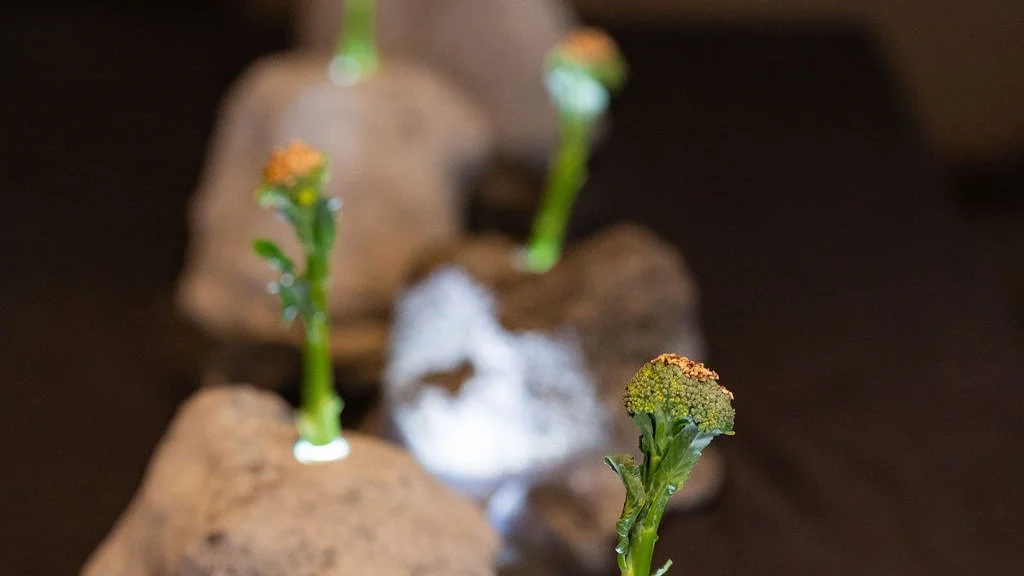
Casting as Thinking
Absence has to be designed before presence can be perceived. Concrete cast into sand, edible lace at one millimetre, and a vessel built to be emptied.
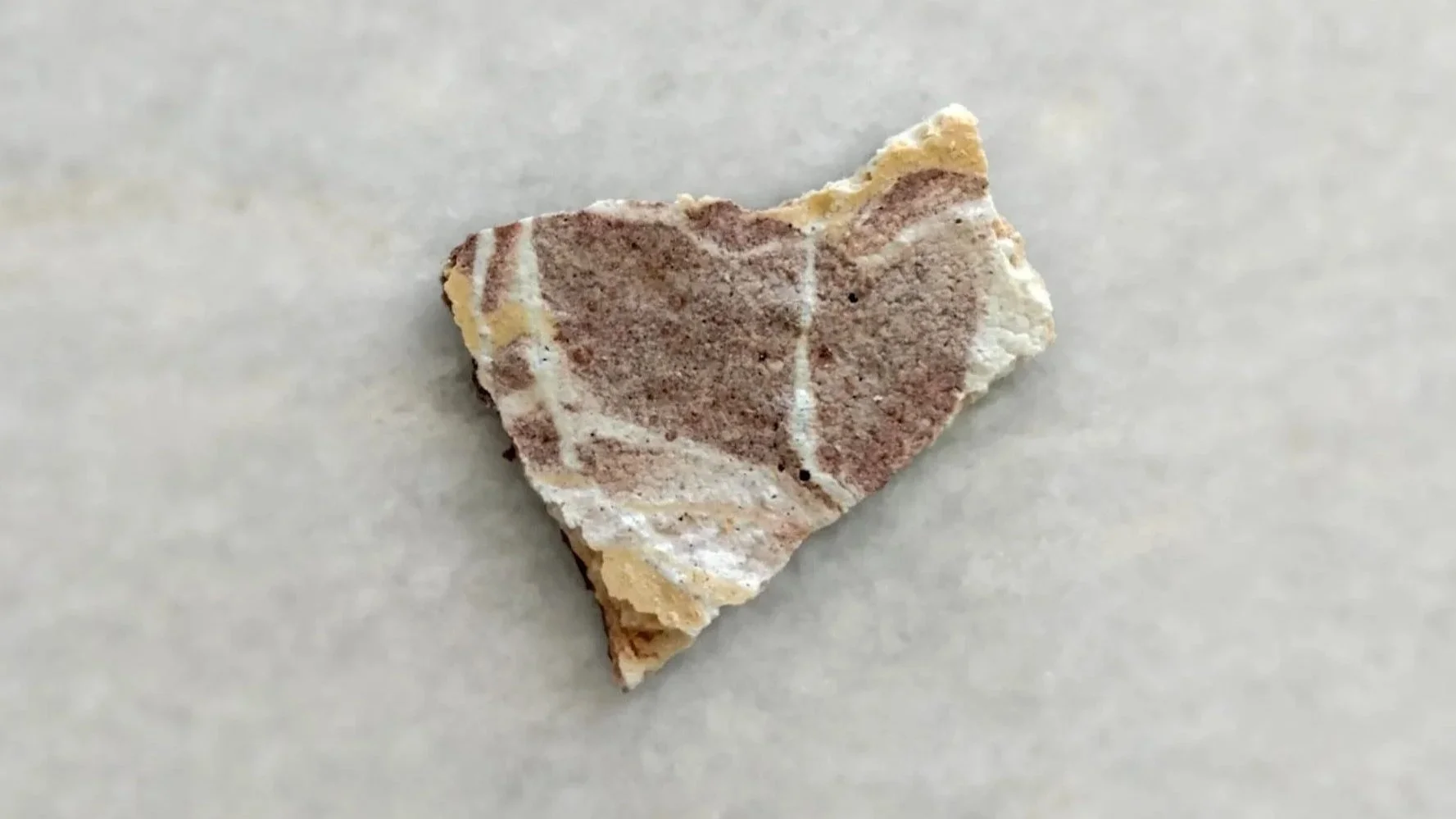
Edible Sculptures and the Anatomy of Deception
Porous stone that turns out to be meringue. Mushrooms dusted with cacao, picked from a plaster landscape. Both works share one material, and neither admits it. On deception as method, and why form must mislead perfectly.