
Sovereign Space
CONTINUUM No. 001
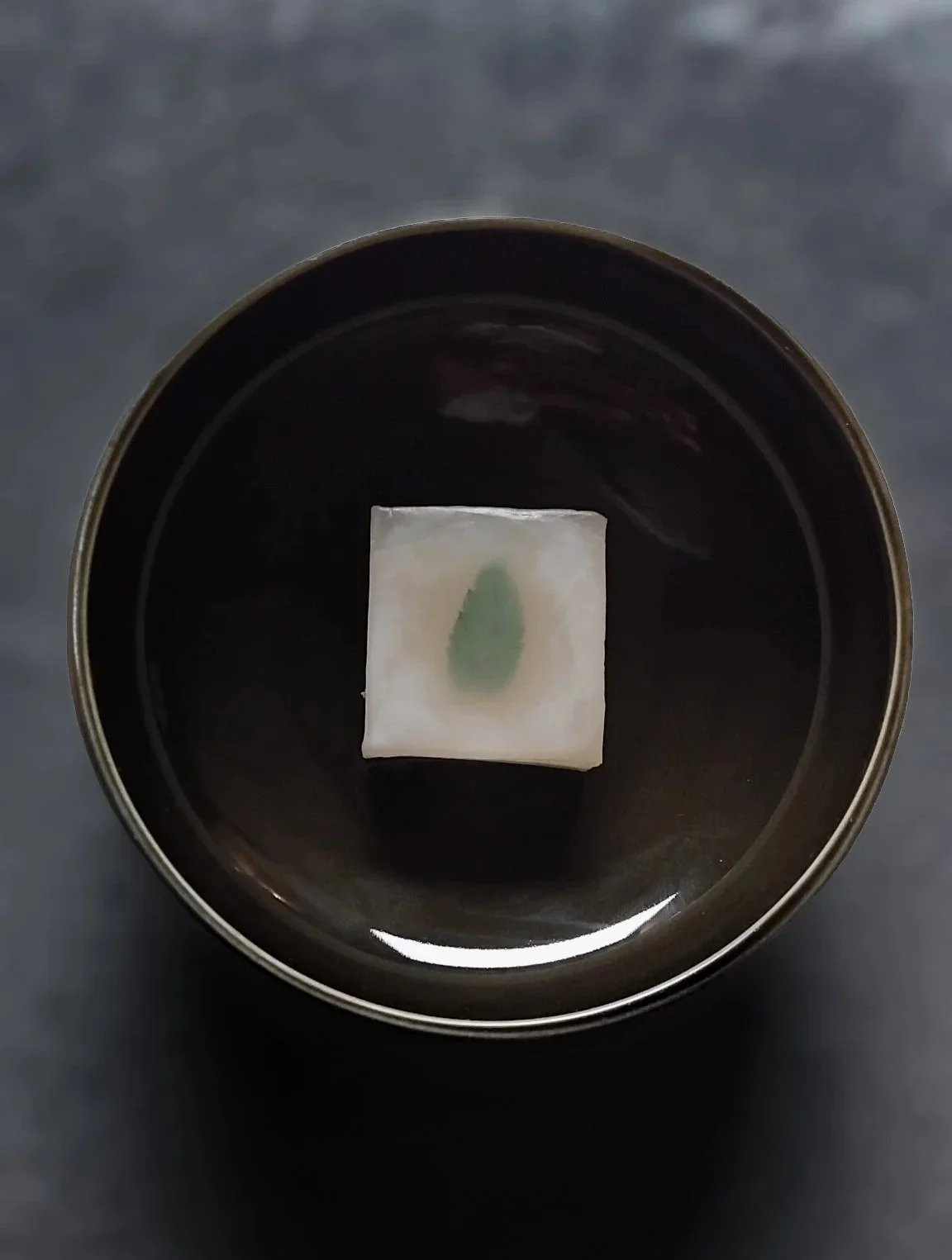
Mint leaf suspended in translucent coconut jelly. An optical illusion of frozen stasis and manipulated clarity.
Architecture of Presence
The silence is the loudest thing in the room. Silence dominates the room. Rather than a mere absence of sound, true quietude manifests as a physical weight, a structural force holding its ground against relentless digital noise. Environments operating under this material logic refuse to compete with screen-bound realities, demanding instead an entirely different quality of human attention. Such is the essence of sovereign space: neither minimalism nor emptiness, but a disciplined demarcation between what is admitted and what is refused.
I.
Modern culture frequently mistakes hyper-visibility for actual presence. Within contemporary gastronomy and interior architecture, this misconception breeds the temporary thrill of the 'Instagrammable' moment, visual choreography engineered exclusively for the lens rather than the living body. Designed for rapid consumption, such spaces dissolve instantly, leaving no psychological trace.
Curated absence offers the antithesis. Choosing to leave physical volume unburdened allows the human psyche to expand rather than contract. Sovereignty, at its core, remains the refusal to adapt to the fleeting.
II.
Stone, raw timber, and heavy linen carry inherent haptic gravity. Resisting the frictionless speed of the digital screen, these textures offer a sensory feedback that no glass surface can replicate. Placing a hand-cast concrete vessel upon structured flax immediately alters the room's register before a single word is uttered. Embedded within every spatial partition and culinary composition at Veceto lies this foundational truth: materials function not as decoration, but as a silent, philosophical argument.
Light undergoes treatment as a physical medium; shadow operates as a structural component. Central to this philosophy is the concept of the Monolith, a singular focal point of such density that it anchors the entire surrounding composition. At this level of spatial intention, human behaviour shifts instinctively. Conversations slow, movements gain deliberation, and the immediate, physical realm becomes infinitely more compelling than the glowing device held in the hand.
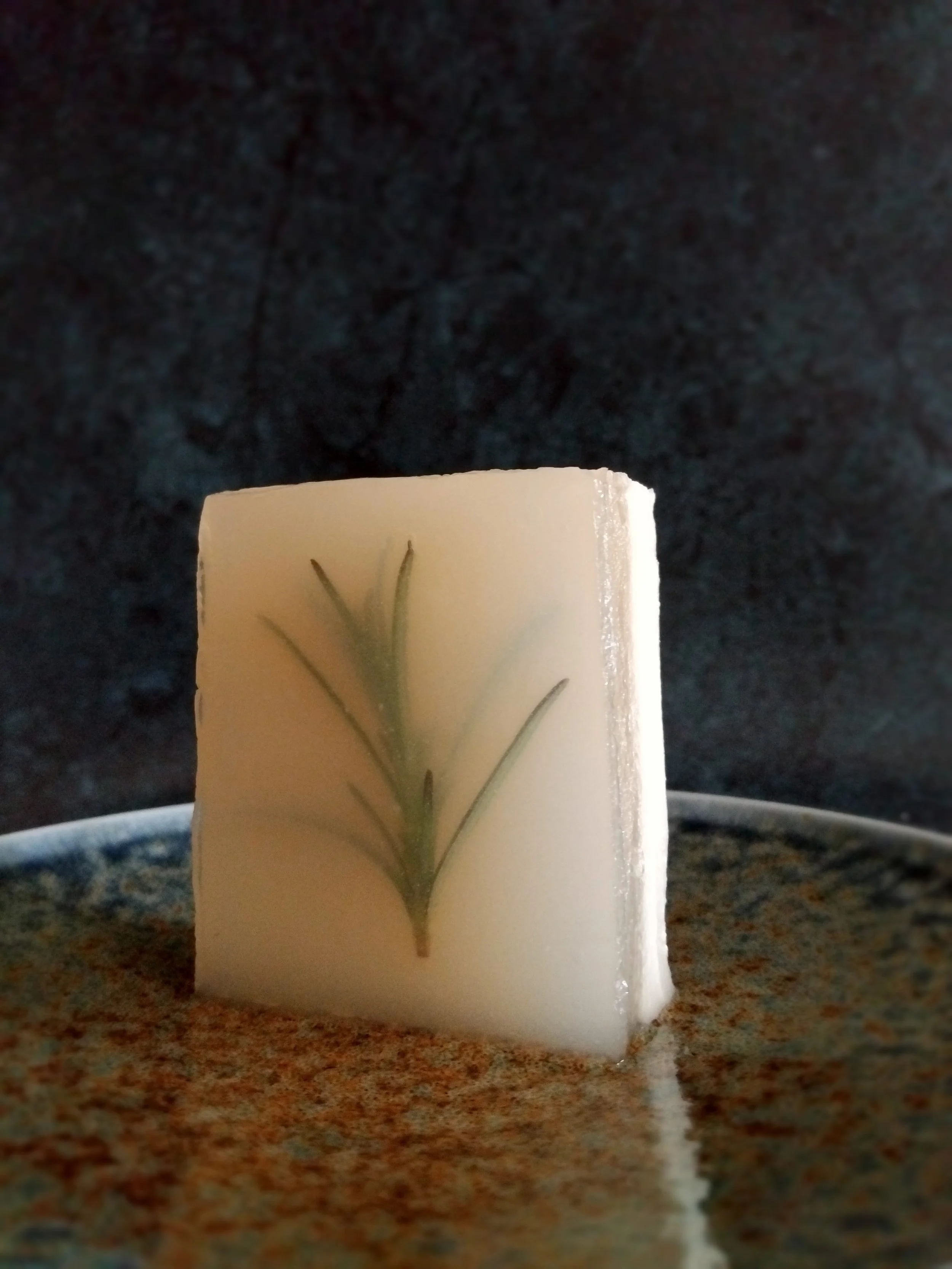
Sovereignty is the refusal to adapt to the fleeting. When the two-layered coconut agar meets the rust colored nuances of the plate, a tension is created that permits no digital distraction. It is the architecture of the final decision.
III.
Suspended within translucent agar, a single rosemary twig hangs frozen in time. This crystalline layer forms a window, balanced against the opaque density of the cream behind it. Below, a dark teal plate, kissed with oxidation and rust, introduces the raw, earthen contrast necessary to ground such clinical precision. Far beyond a mere exercise in plating, this composition represents a study in stratification, the deliberate creation of multiple vantage points within a single frame, each whispering a unique question to the eye.
Identical materials give rise to entirely new inquiries. Stillness translates as depth. Profound presence hints at conscious concealment. While the surface remains unyielding, the eye insists on discovering what lies beneath.
Luxury, in its newest evolution, defines itself through pure presence. It promises neither influxes of information nor greater digital access, but the rare, unmediated ability to exist fully within the room where creation occurs. Sovereign architecture never begs to be photographed. It demands to be inhabited. That distinction, ultimately, alters everything.
Once an environment achieves sovereignty, competition ceases. It holds. And within that holding, it subtly transforms those who pass through, leaving a permanent, tectonic shift they carry forward, unable to name precisely what changed.
For those drawn to commission work of this spatial intention, the studio is open. Commissions