Diminuendo
Classification: Gastronomic still life, three parts
Location: New Zealand · Year: 2026
Medium: Cast bust, glass vessel, chicory, breaded aubergine, seaweed powder, grapes, potato gratin, cashew cream, braided bread, pepper aioli
Concept: Classical grey at three descending heights, carrying one pink accent at equal strength
Gastronomic Still Life in Three Descending Parts
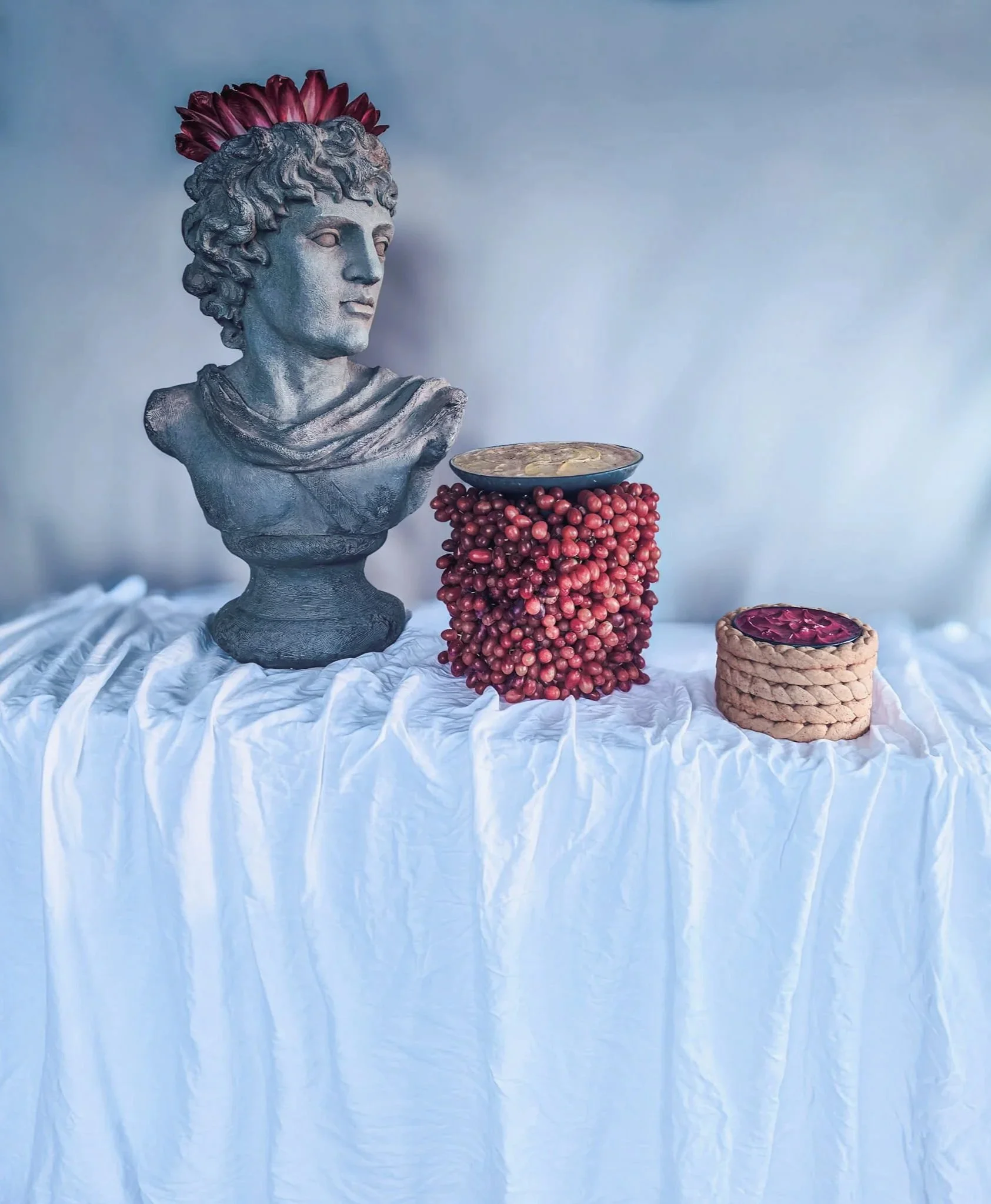
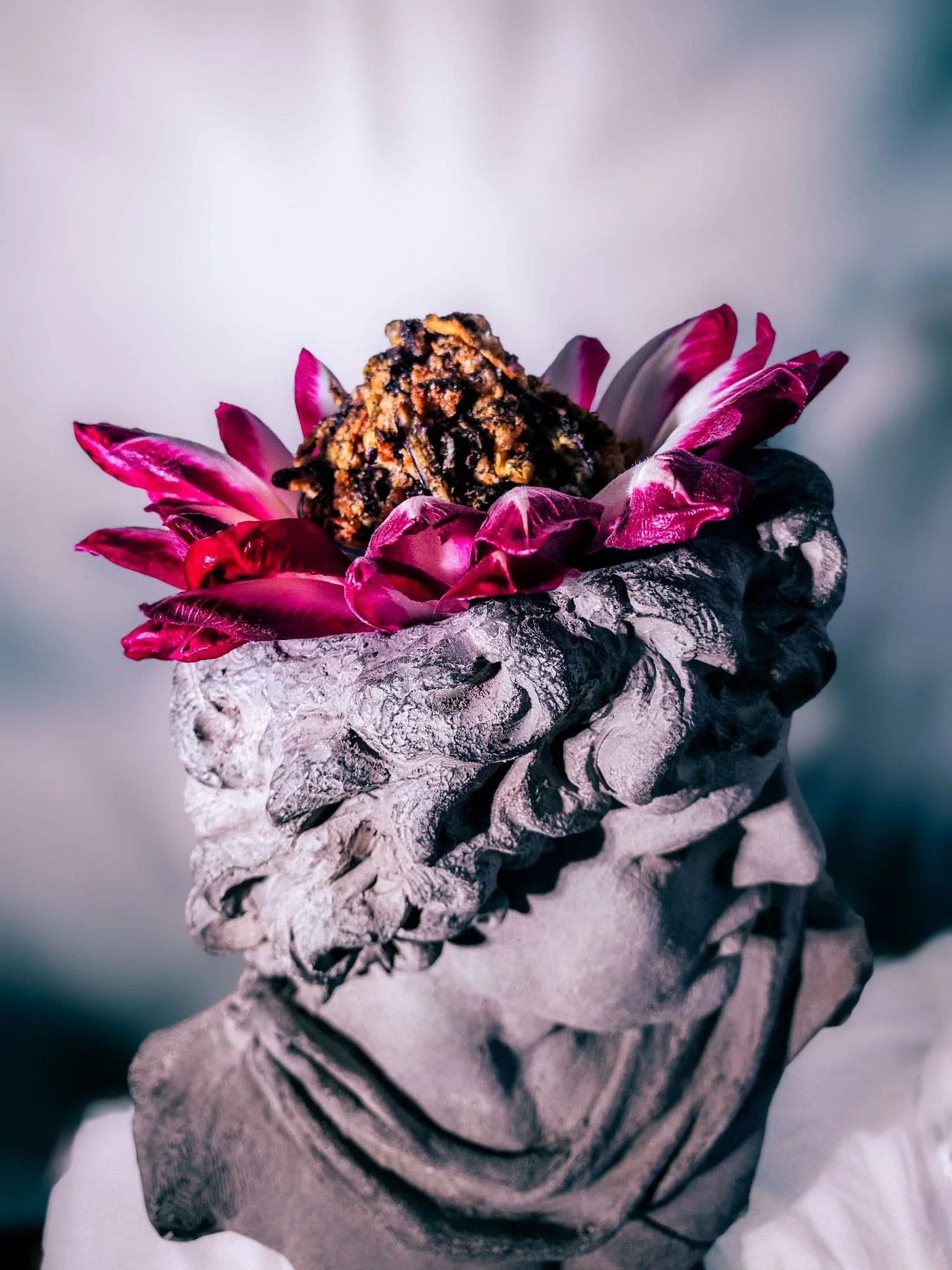
Grey came first, and gastronomic still life followed its temperature rather than its weight. Apollo stood at the left of the table, cast in the flat grey of poured concrete, hollow from the crown down. Glass sat inside the head. Breaded aubergine rose out of it in a cone, darkest where the frying went furthest, dusted at the ridges with seaweed powder. Chicory closed the opening, pink at the tips, pale ends turned inward and out of sight.
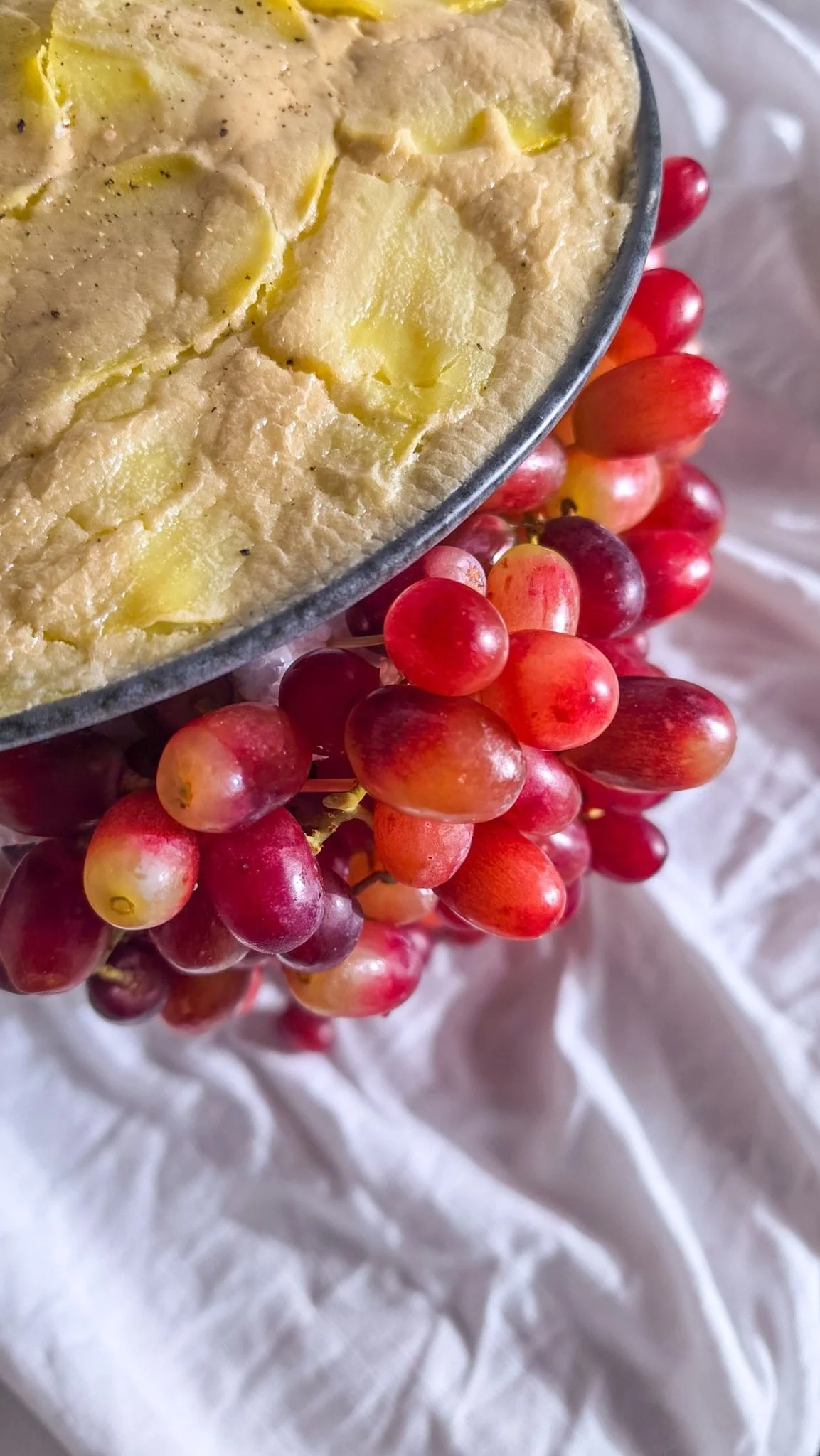
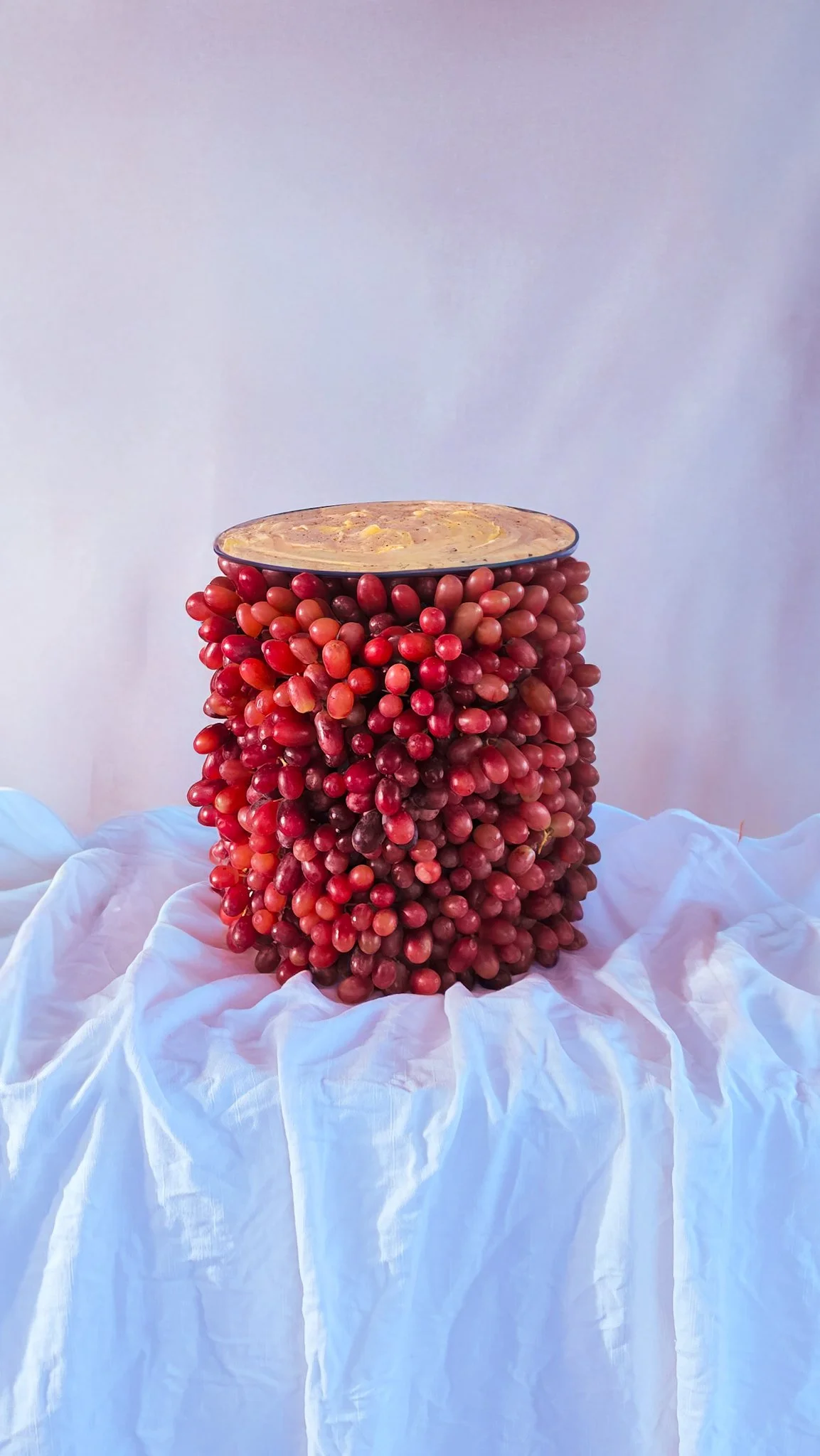
Half that height, pink grapes carried the second part. Stacked from linen to rim, they built a column that ended in a dark grey bowl of potato gratin under cashew cream. Beige against grey, warm against cold. Settling of the bowl was imperfect. Its foot never sat flush with the top of the column, and nothing was done to correct it.
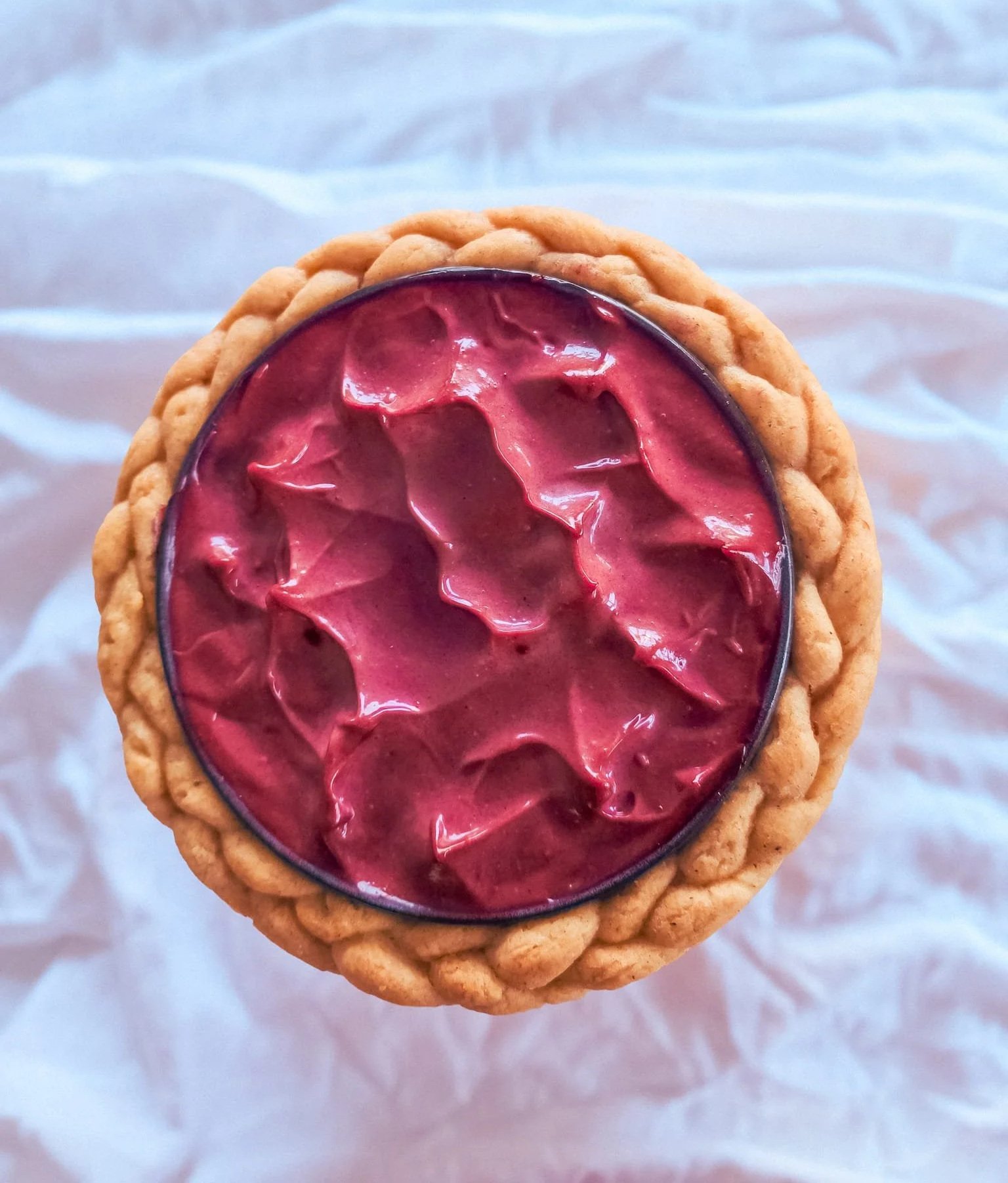
Five rings of braided dough made the third foot, halved again from the second. Above them sat a bowl so close in tone to the surface beneath that only its contents registered: pepper aioli, its surface pulled upward by setting a spoon down and lifting it away. Peaks stayed where the spoon left them. Braid beneath held the load without reading as support.
Assembly ran from the tallest downward, each part built to be read from standing height. Table linen carried no pattern, so the grey of the head and the grey of the vessel could differ by a degree without either looking wrong. Difference of one degree matters more than contrast of ten.
Where Height Falls and Colour Does Not
Stone keeps the head it is given. Contents do not. What sculpture hands down is that division: permanence in the support, decay in what the support carries. Diminuendo held both at three scales and resolved neither.
Pink did not diminish as the parts descended. Widest at the middle, where grapes gave it the largest surface, it appeared at the chicory tips as a line and in the aioli as a whole field. Scale fell by half each time; colour held. Naming came from music rather than architecture for that reason, since a diminuendo governs volume and not pitch.
Roman and Greek vocabulary ran through all three: bust, ring, plinth height, grey. Rings of dough repeat the wreath, grapes repeat the offering, grey repeats what was quarried. Working this way places the tableau nearer to masonry than to the plate, and keeps the questions closer to the mason's than to the cook's: how high, how heavy, how long before it goes.
Immersive work does not require projection; height and proximity do the same thing more quietly. Multisensory reading followed from the material itself: braid under load, aioli setting at the surface, grapes warming as the hours went.
Nothing was preserved. Aubergine softened within the hour, aioli lost its peaks, grapes went from column to fruit again. Edible matter keeps that clause, and VECETO works from it as a food design studio building at the height of the object rather than the plate.