
Transient Architecture
Brutalist Cake
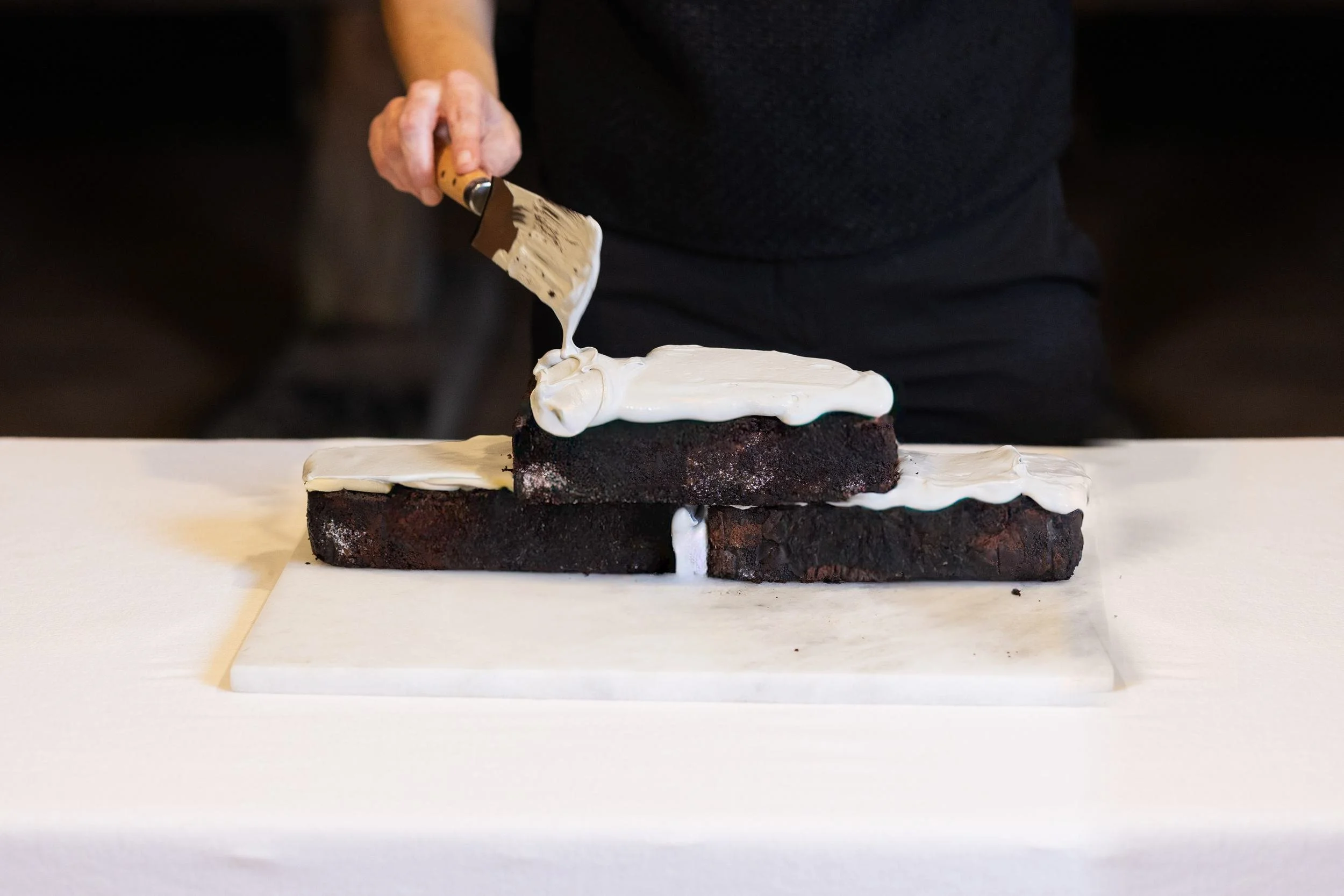
Raised before an audience, brutalist cake took the form of a wall and kept it only until the knife arrived. Most architectural desserts borrow a facade; Veceto borrowed the labour instead, building by hand and binding by trowel. Recognition came with the mortar, in the moment those watching saw masonry where they had expected something sweet. Demolition followed, portion by portion, carried into the room. Little about it was meant to outlast the evening. What mattered was not permanence. Legibility did: the instant a structure became readable, and the slower one after, when it began to disappear.
CLASSIFICATION: Live Architectural Performance
LOCATION · YEAR: Bay of Plenty · 2026
MEDIUM: Chocolate cake, marzipan, mascarpone
CONCEPT: Existed as construction before it became dessert.
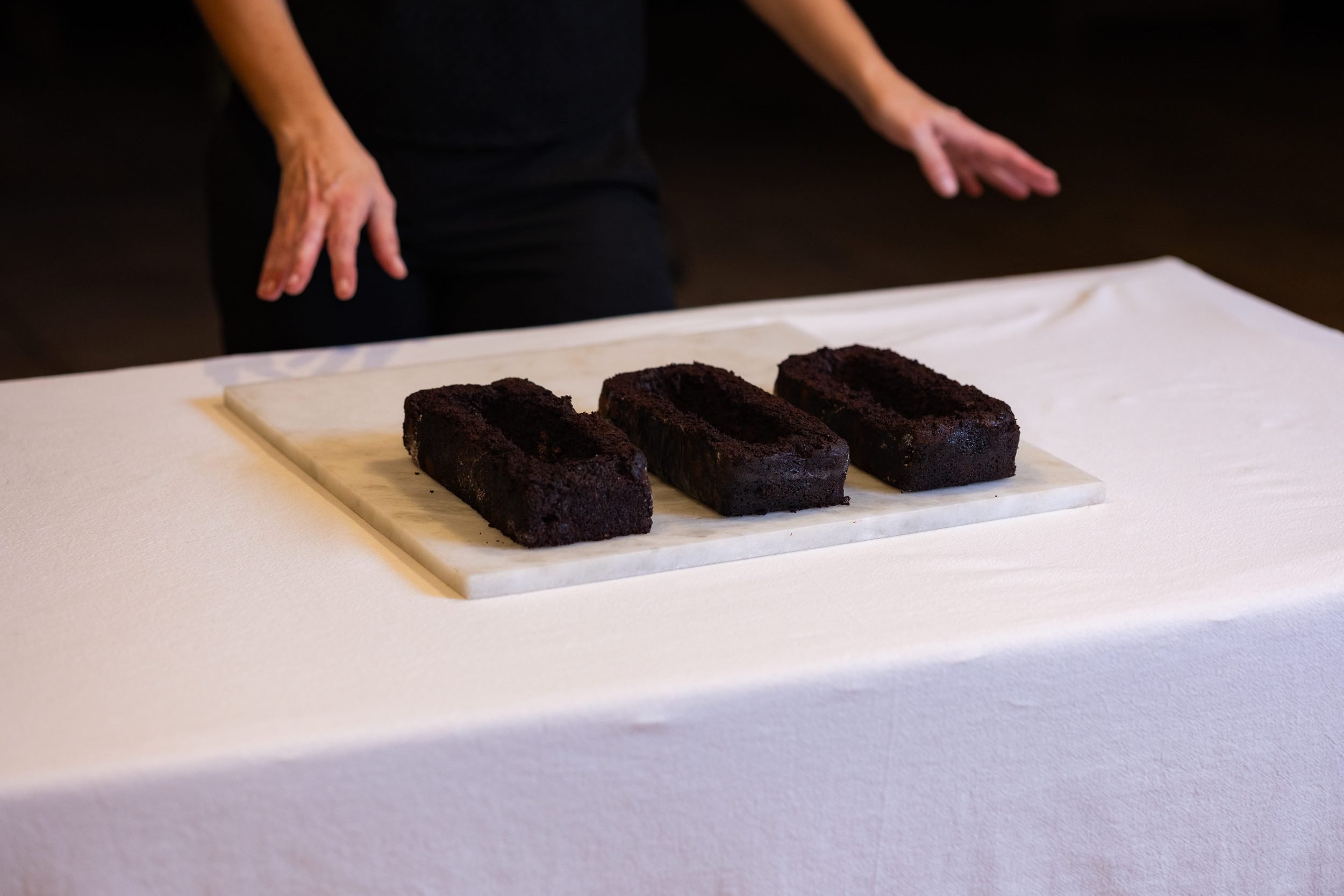
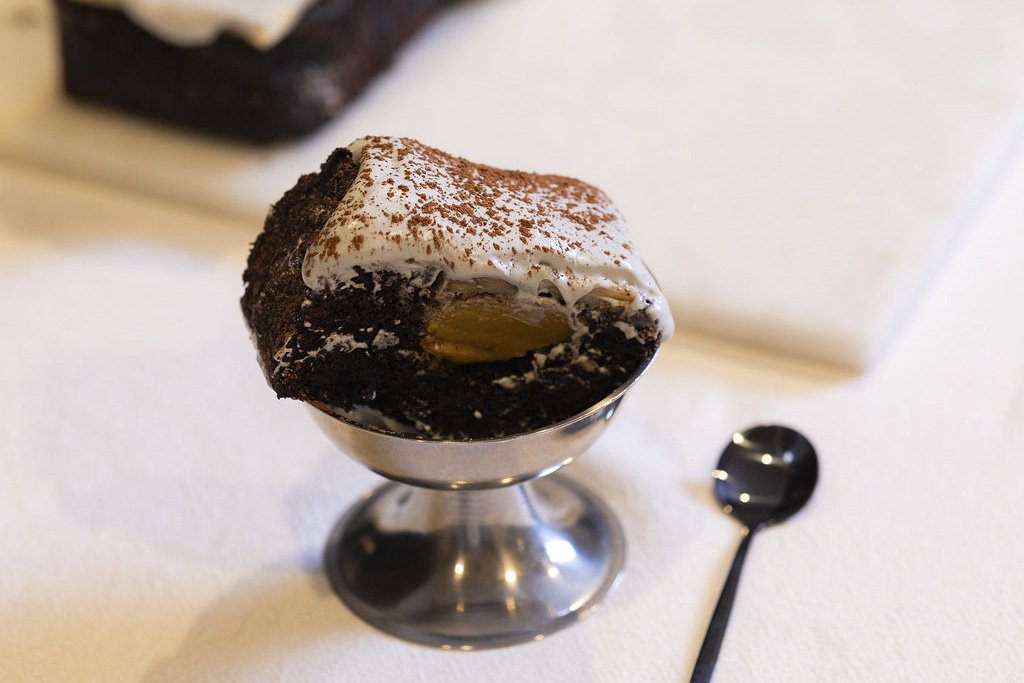
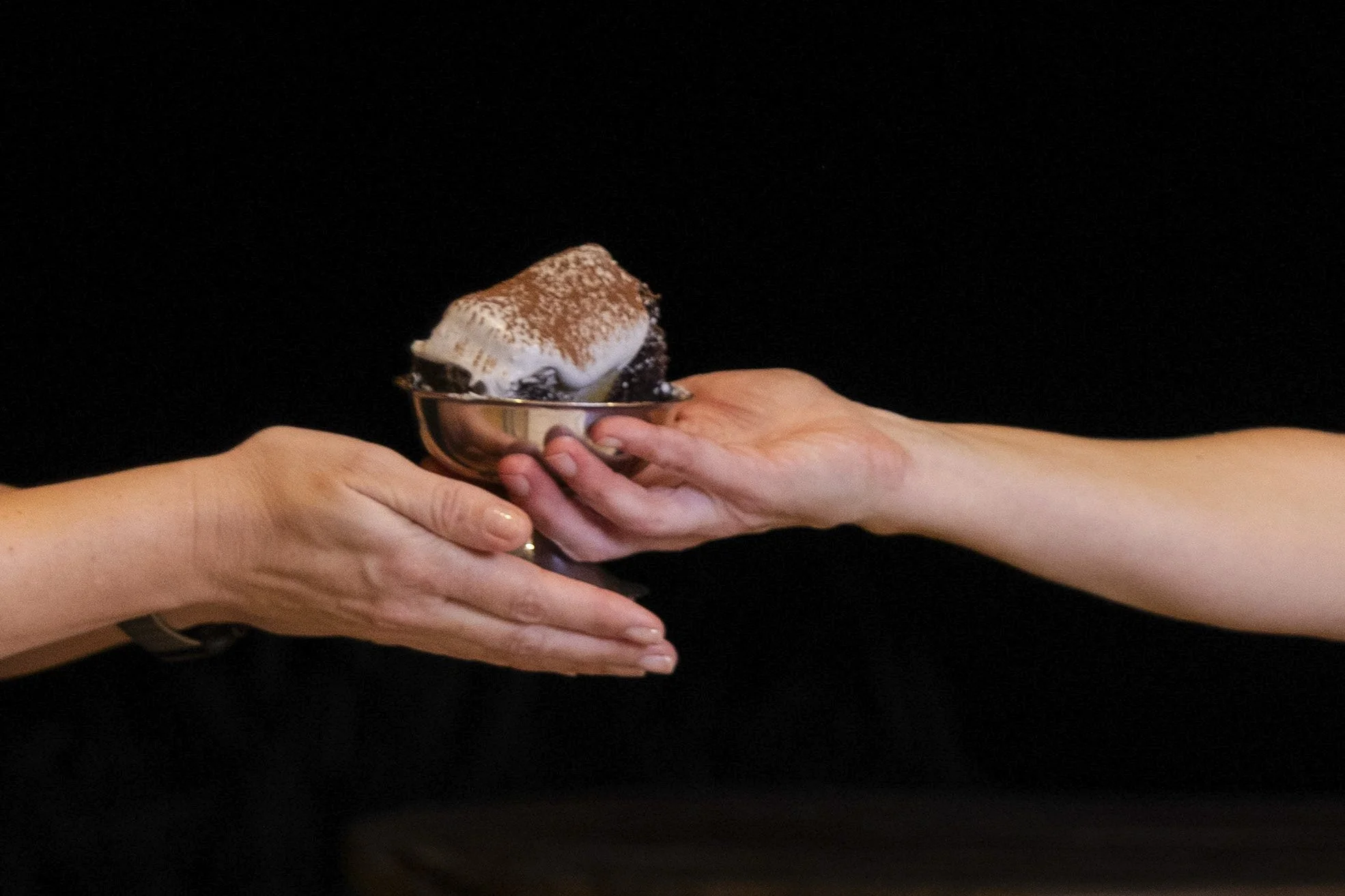
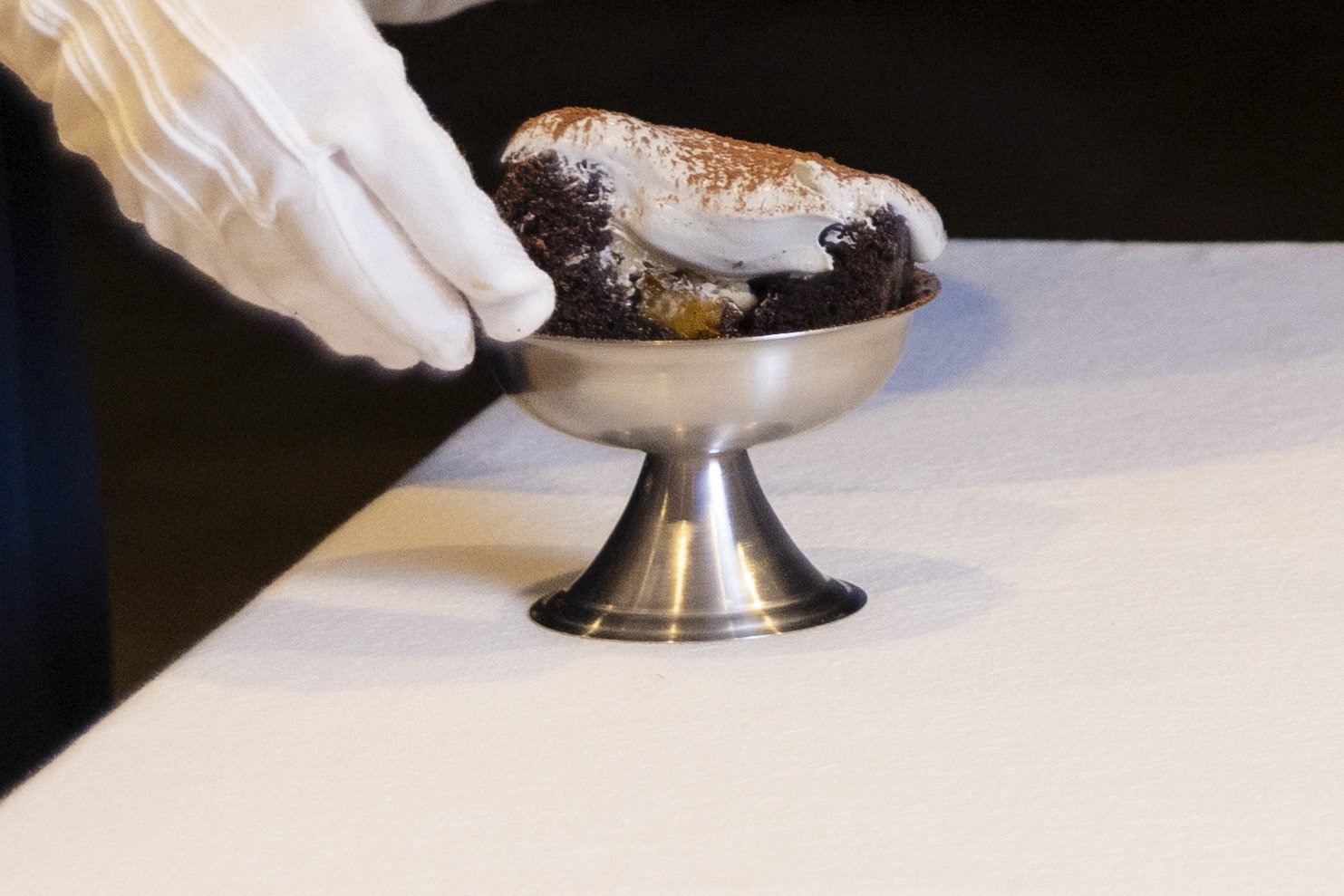
Demolition came first. Veceto wanted a construction raised in order to be dismantled, and eaten in the process. Other choices followed from that single decision. Brutalism lent the piece its manner. Raw concrete never pretended to be lighter than it was. Candour of that kind passed to brutalist cake, made of a material that could not survive the room it stood in.
Indoors, spatial design began with the light, which fell from the ceiling onto the work and nowhere else. Behind it, terrace doors stood open, so the darkness outside became the backdrop. Onlookers kept a few paces back, near enough to hear the trowel and far enough to see the whole elevation. Nothing else in the room competed with it. Distance mattered more than any decoration. Close up, the surface read as material; from a few paces, it read as architecture. Space scenography of that kind asks for no apparatus, only a decision about where people stand.
Construction began without announcement. Bare blocks went down on pale stone, and for a while they could have been almost anything dark. Layer followed layer at the pace of the trowel, in full view. Every block was set by hand, the way culinary architects lay their courses. Edges kept the slight irregularity of something handled, as laid brick does. Precision lay in the joints, not in the units they held together.
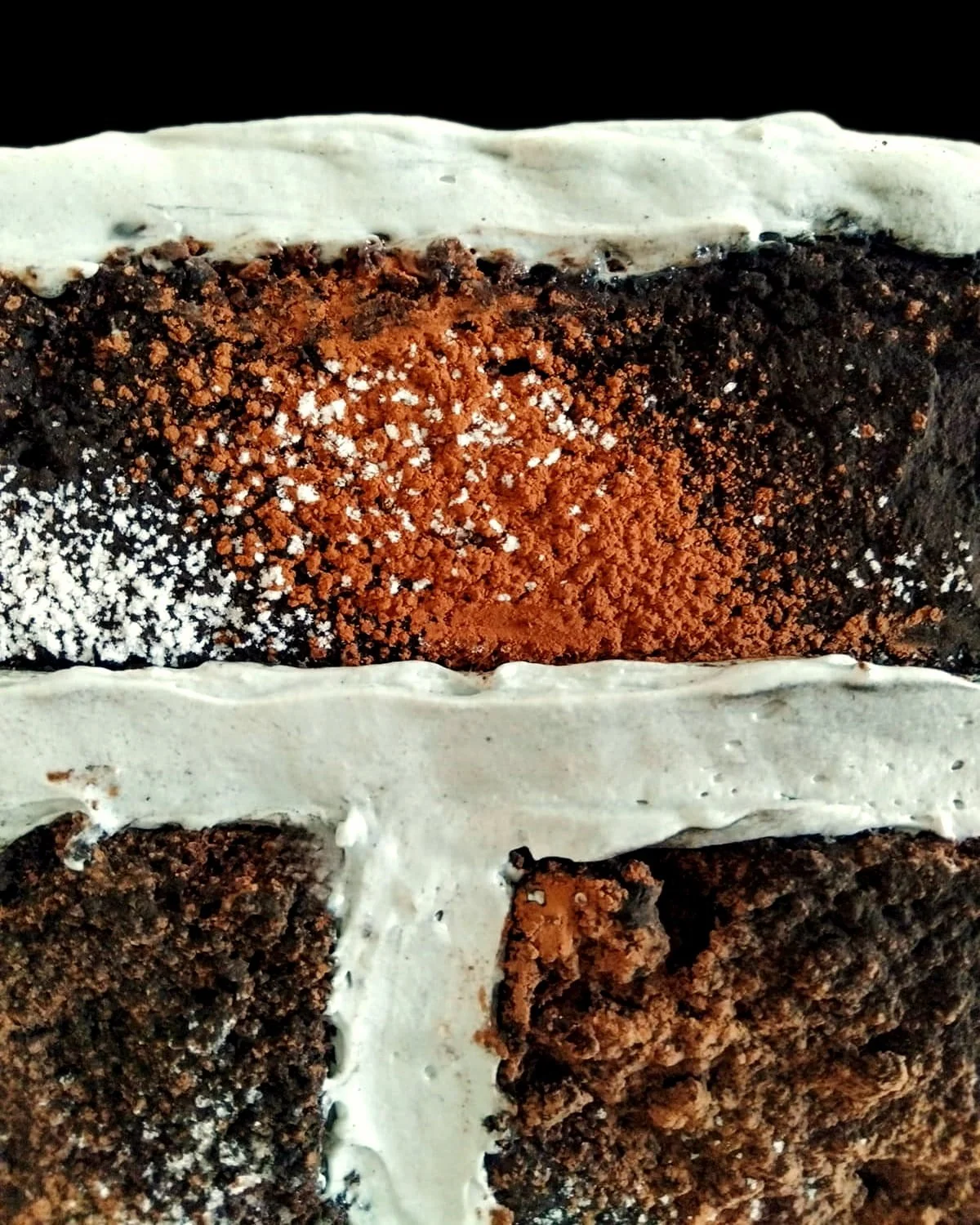
Mortar changed the reading. Once grey joints ran between the layers, the onlookers saw clinker, bond and masonry under way. In that instant brutalist cake reached its first completion, before anyone had tasted anything. Joints are what let the eye name a wall. Without them, stacked sponge; with them, a building. Everything depended on that recognition, and on how quietly it arrived.
Watching such labour is ordinary on a street and strange indoors. Seen at close range, after dark, it gained the stillness of a ceremony. Nobody was asked to admire it, only to look. Presenting a finished wall would have been simpler. Building it live placed the recognition in the onlookers' own eyes rather than in a caption. Sequence carried the meaning: raising, recognising, opening, sharing, leaving.
Built to Come Down: on Architectural Desserts
All edible parts were made in the studio; the silver bowls and the tools were bought. Colour was tested before anything was assembled, until the surface held the tone of fired brick. Stacking was rehearsed separately, so the courses could carry their own weight for as long as the performance lasted. Trials measured how quickly mortar would draw into each layer and how soon softening would begin. Sealing answered that tolerance, keeping the joints on the surface instead of letting them seep through. From concept to fabrication, each test served one condition: standing just long enough.
From Cutting to Ruin
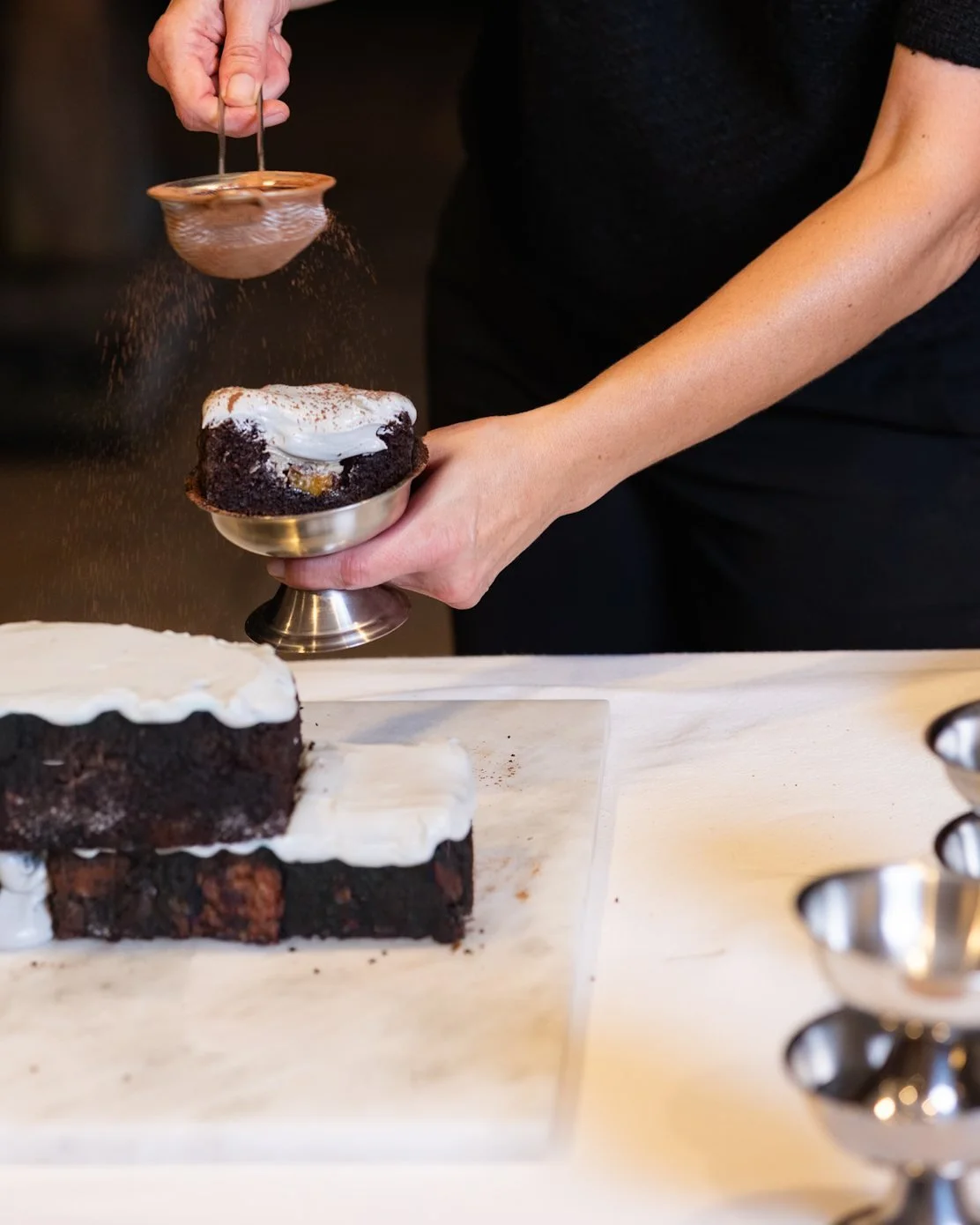
Cities usually hide demolition behind hoarding, dust and noise. Dismantling took place in full view, at the pace of a knife. Shortly before, the same room had watched the structure rise. Taking apart became as legible as putting together. Kerstin Pricken made the first cut herself. Opening the masonry was the second half of building it, done by the same hands and with the same attention. Sections showed their interiors for a moment before being lifted away.
Carrying belonged to someone else. Her assistant, in white gloves, took each portion from the cutting into the room. Dividing the roles kept the labour at the structure and the passage of each portion distinct, and both visible. Eating continued what cutting began. Each portion taken removed one more piece, and no single person could have finished the dismantling alone. Few buildings ask the people around them to take part in their undoing; brutalist cake asked for little else.
Sound, weight and sight came before taste: steel through sponge, silver settling in the palm, a profile losing its line. Immersive staging was never added. Proximity alone made the evening multisensory. Photographs keep the colour and outline of ephemeral art. Weight, sound and the tension of watching something stable become edible do not travel through an image. Such a gap is no loss; it is why the piece took place live.
Not every block was eaten. Part of the wall still stood at the end, a temporary food artwork left as ruin once attention had moved on. Neither whole nor gone, brutalist cake ended closer to real demolition than any clean finish would have been. For a food design studio, an edible object is complete once it has been read, divided and partly left behind. Conceptual food art of this kind works towards such a sequence rather than towards duration. What remains afterwards is a record, and a record is enough.
Taken on as a commission only where demolition belongs to the brief.