Mycelium Cellar
Classification: Ephemeral Art Installation
Location: Aongatete · Year: 2026
Medium: Cauliflower panna cotta, oyster mushrooms, dates, salt, wool, cotton, porcelain, oak, slate, black linen, candle holders reworked in hot glue and matt black
Concept: Damp beneath a house ripens wine and raises spores alike. Wool and cotton stood in for the second.
Sculptural Food Installation
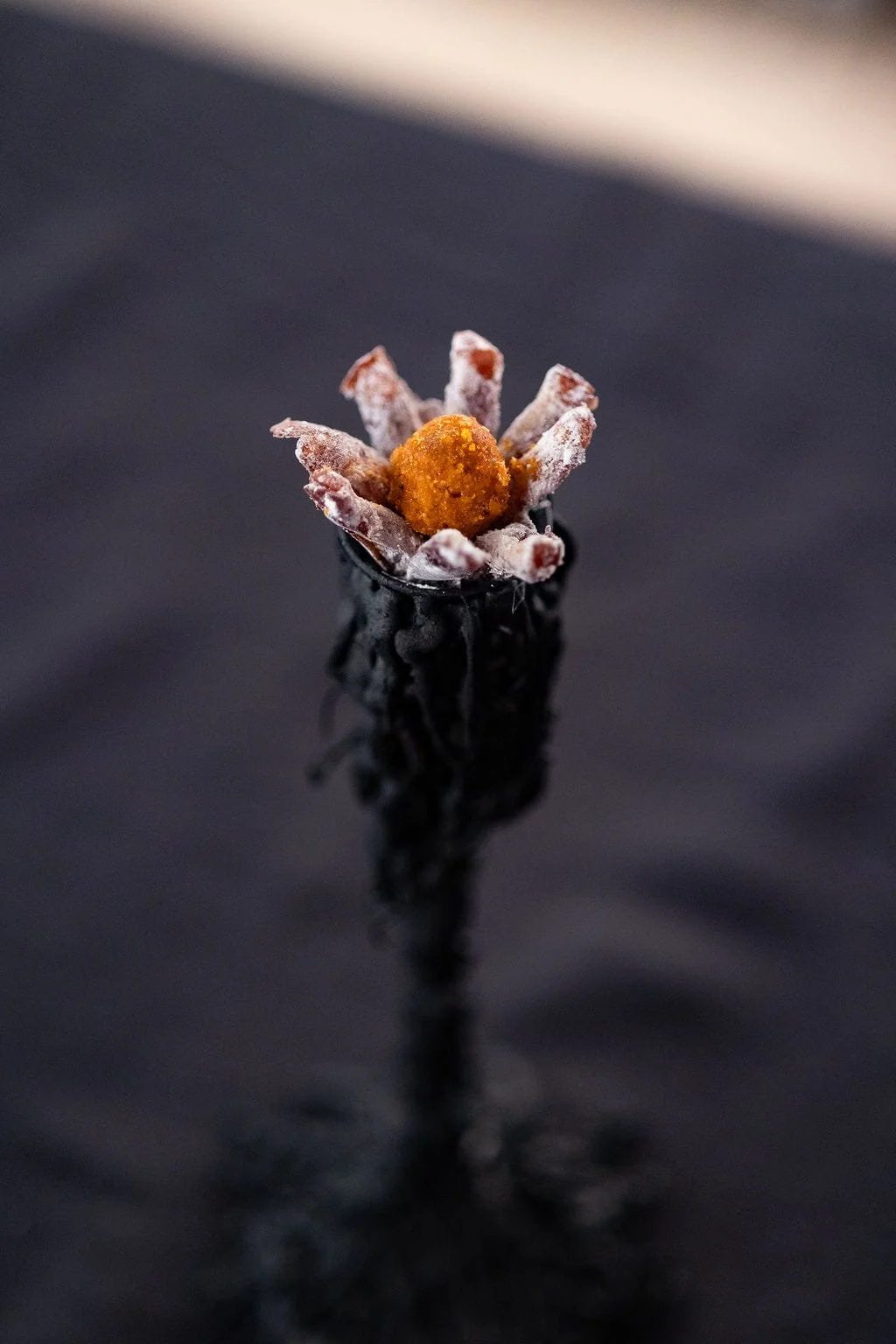
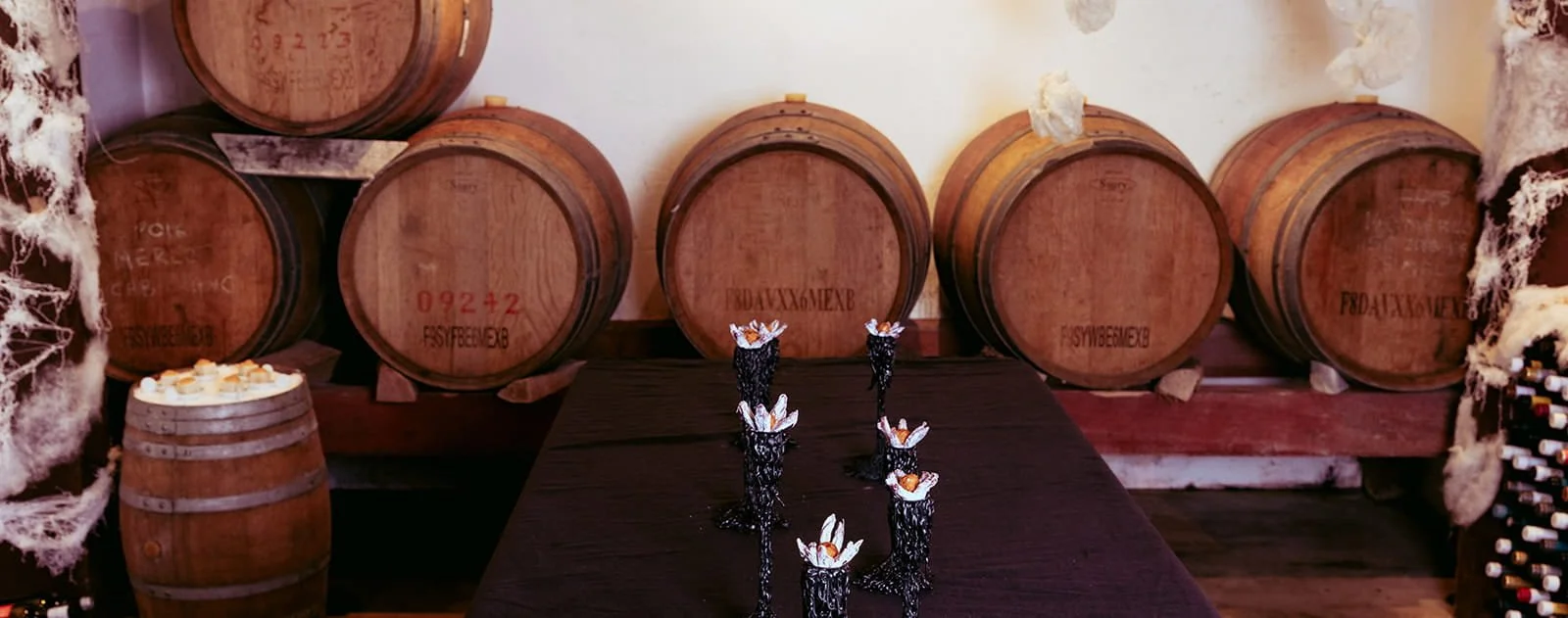
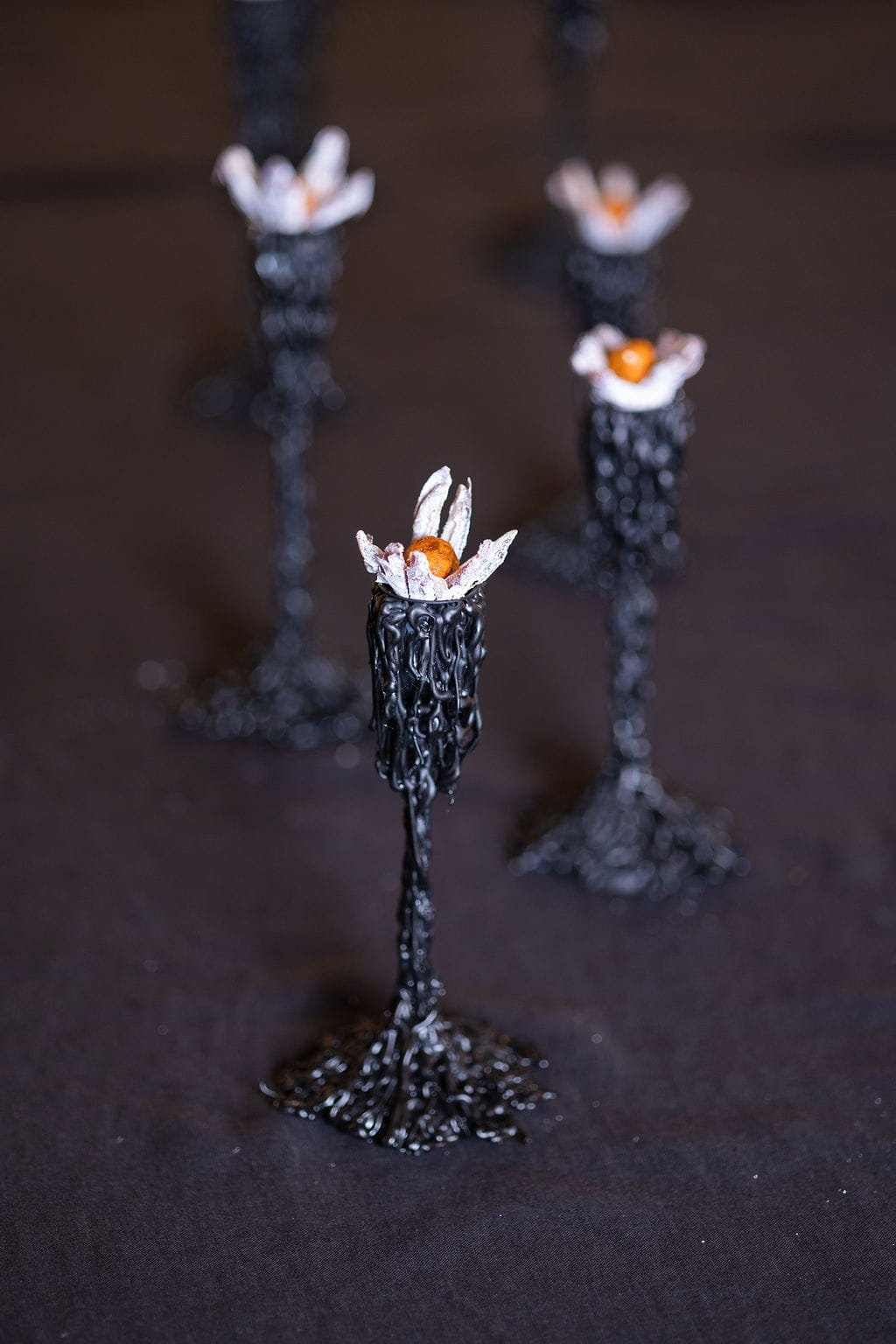
Neoclassical order met a sculptural food installation staged inside a working wine cellar, where habit rather than theatre had always governed the room. Candle holders built from ordinary hardware were reworked by hand, wax pressed and pulled with hot glue until it read as arrested drip, then sprayed matte black to sit flush against the cellar's white stone walls. Dates were carved into flower forms and dusted white until they resembled porcelain rather than fruit, each closed around a private mixture built on mandarin that no eye could guess from the outside. Black linen and dark wood held the table in restraint, orange allowed only as a single precise accent rather than a colour of its own.
Wax held its false drip only because nothing asked it to move further, a permanence borrowed from an ordinary flame and lent instead to something that would never again be lit. Reworking existing hardware rather than casting new objects kept the candle holders honest to the room they stood in, matte black chosen to recede rather than announce itself against stone walls already softened by years of damp. Already cut, filled and dusted white, each date flower reached the table long before any eye could take it in. Restraint at the base let a single flower carry the eye upward, wax kept low precisely so porcelain-white petals could stand out against so much black.
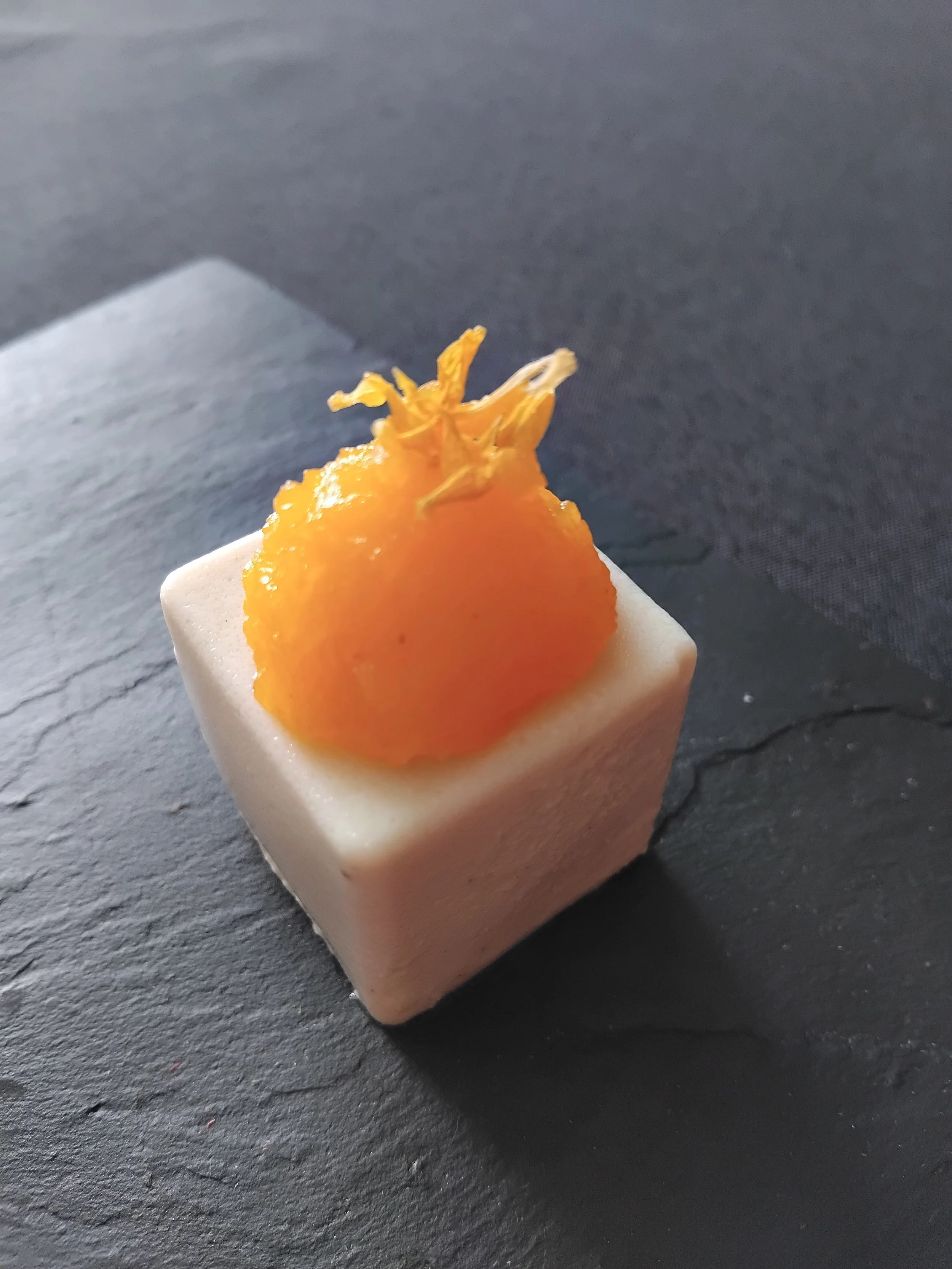
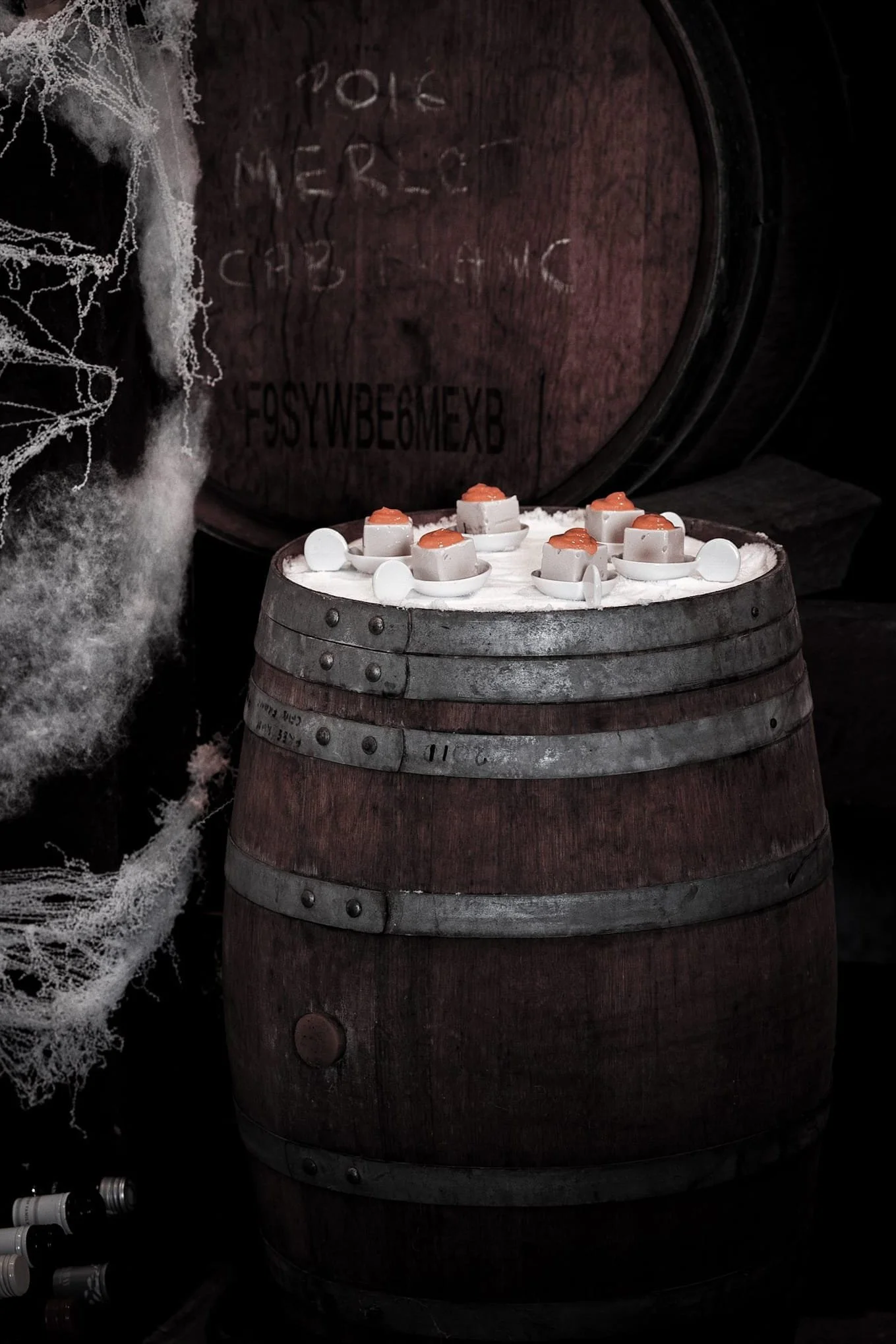
Salt covered the barrel head first, laid thick enough to hold its own edge before anything else arrived, then left to recede exactly as the candle holders had. Cauliflower was cut and set into cubes shaped to resemble stone, black garlic hidden inside each one where no eye could find it without breaking the surface, apricot puree resting on top in a single deliberate drop of colour against so much white. Circling the arrangement, porcelain spoons curved into handles shaped like a cup's, offered rather than merely placed, an invitation to disturb cubes that photographed as mineral and tasted as something else entirely. Distance flattened the barrel into a study of near white on near white. Proximity broke that flatness into salt crystal, ferment and fruit arriving almost at once.
Overhead, wool and cotton threads spanned the cellar beams in patterns that suggested growth without claiming it, no fungus deliberately cultivated for the room, only implied by fibre pulled taut where spores might otherwise have travelled. Damp that had ripened wine in this cellar for longer than the room could account for was the same damp capable of raising something else entirely, and the threads stood in for a growth the eye was invited to imagine rather than verify. Close to the beams, two mushrooms had risen on their own, small proof that the cellar needed no help completing what it had already begun. Suggestion carried more weight here than demonstration, even once demonstration arrived unasked.
A Cabinet of Curiosities in Wax and Salt
Wine cellars belonged to some of the earliest domestic architecture built specifically for slow change, Greek and Roman households among the first to set aside a room for nothing but time and humidity to do their work. Borrowing that lineage rather than inventing a new one let neoclassical order sit naturally inside a room built centuries after the tradition it echoed, a single accent of orange standing in for the warmth early wine cellars would have associated with ceremony rather than storage alone. Two forms of ripening shared a single condition without competing for it: wine asked for patience measured in years, spores asked for patience measured in days, and the room extended both the same damp without preference.
Observation preceded intervention throughout the room's staging, existing wooden beams and barrel staves treated as collaborators rather than backdrop. Wood, salt and black linen were left in their own register wherever possible, orange introduced only where the room's neoclassical logic called for a controlled accent rather than a wash of colour. Little in the space was rebuilt to accommodate the work: the work accommodated what centuries of storage had already decided about scale, light and placement. Cellar conditions dictated rather than merely permitted the final arrangement.
Encountered from the doorway, the installation read as an immersive study in restraint, black and white holding the eye until a single accent of orange asked for a second look. Closer contact complicated that first read entirely: wax gave way to touch, salt gave way to taste, and a multi sensory register replaced what had looked, from a distance, like a single careful photograph. Six materials, cauliflower, dates, wool, wax, wood and salt, each carried a separate story that only proximity could unlock, no single vantage point sufficient to account for all six at once. What the room offered, in the end, was a sculptural food installation built to reward the second look rather than the first.
Ripening does not announce its own progress, and neither did this room. Crystals would eventually pull moisture from everything they touched, wax would eventually be handled enough to lose its false drip, and the dates would not keep their shape indefinitely once opened. Built to change rather than to last, the sculptural food installation asked only to be encountered once, in the particular state that damp and time had arranged it for that hour.