The Oceanic
Classification: Exclusive Dining Experience
Location: Matahui · Year: 2026
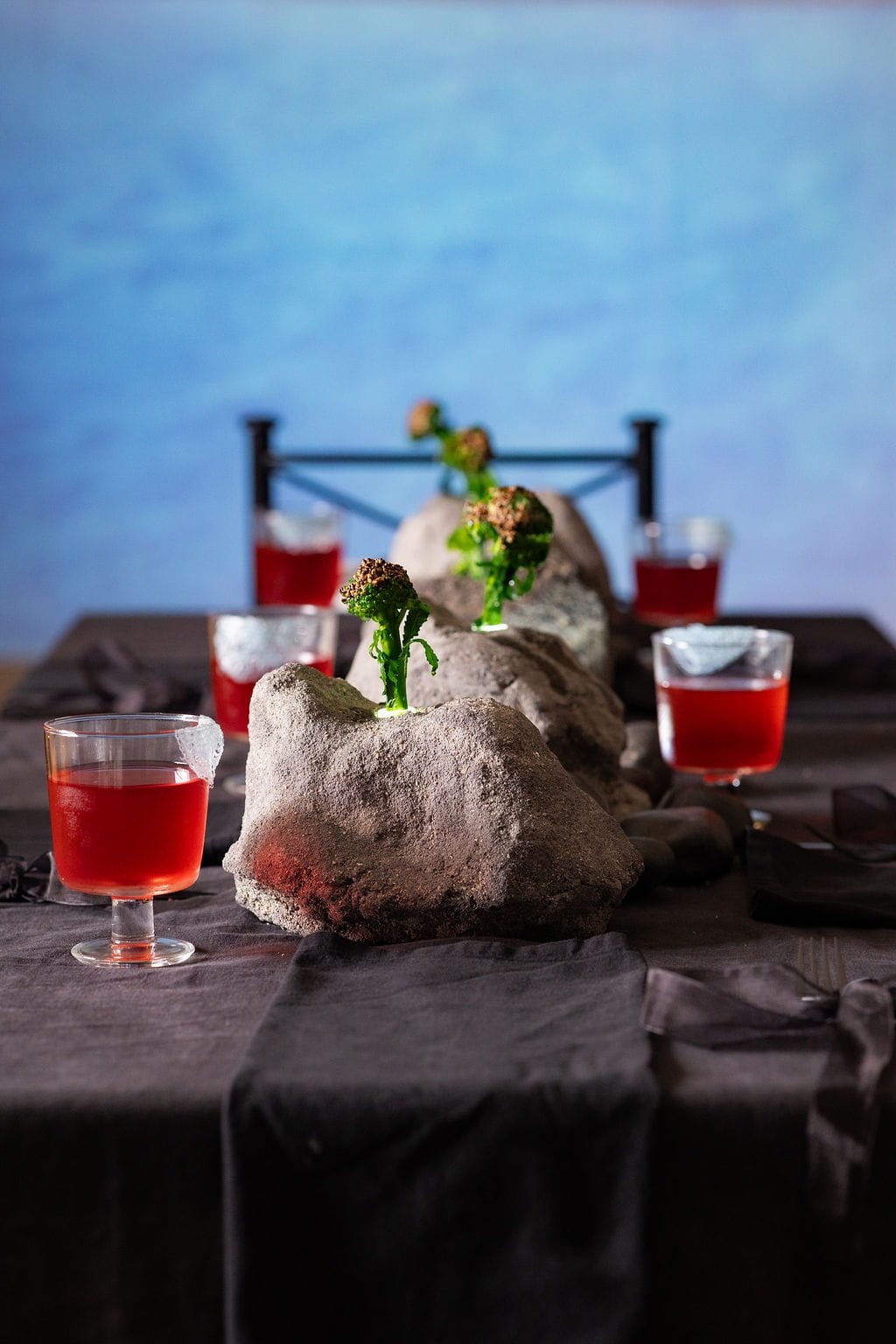
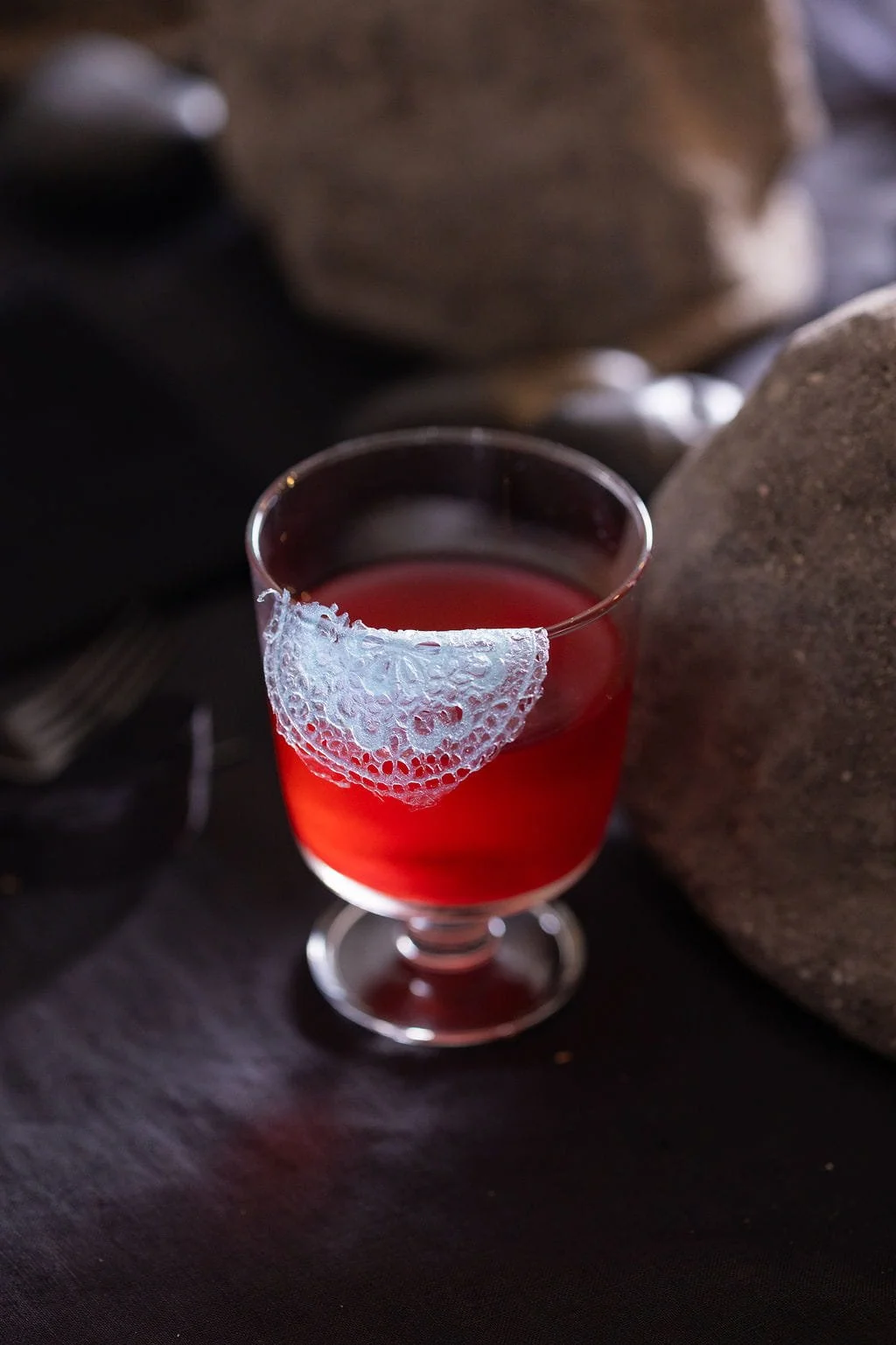
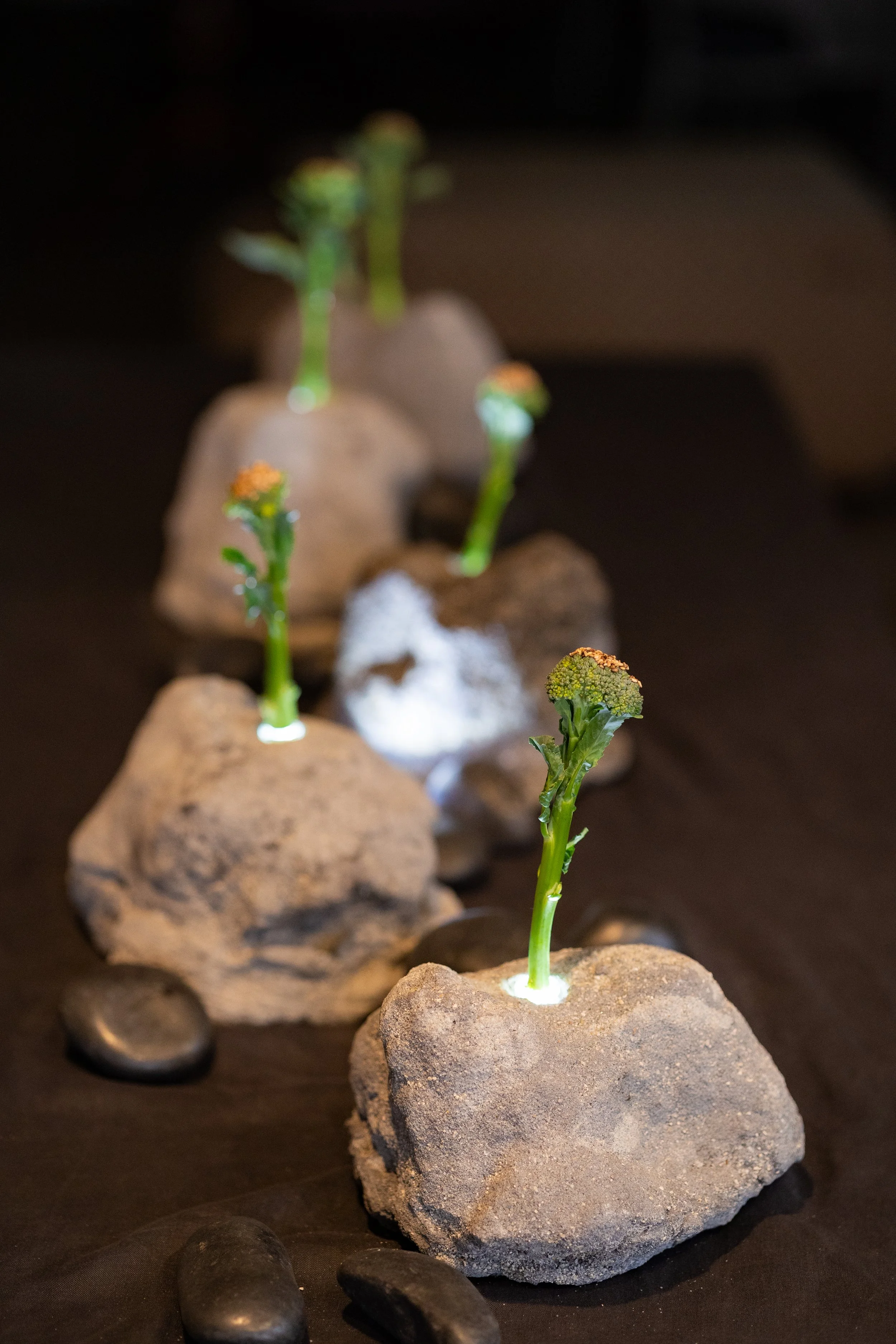
Medium: Blackberry and sage elixir, blue pea flower edible lace, broccolini, small black river stones, handcast concrete, LED lighting, ocean projection.
Concept: Stone shaped by centuries. Light that lasted one evening
Immersive Installation Art Shaped by the Coast
For one evening, immersive installation art took the shape of The Oceanic. No menu preceded it. Only a place preceded it, and what the coastline already held decided what Veceto built. Stone predates the room. Water will outlast it. Both existed in the same space for one evening: the vessels standing in for the coastline, the projection standing in for the tide, the broccolini standing in for what grows in both. Exclusive Dining Experience is the classification on record, not Event, not Catering. That distinction is not semantic. Any event is arranged around a client's calendar. Here, the arrangement began with a coastline instead, and the calendar adjusted to it. Order matters: immersive installation art first, dining experience second.
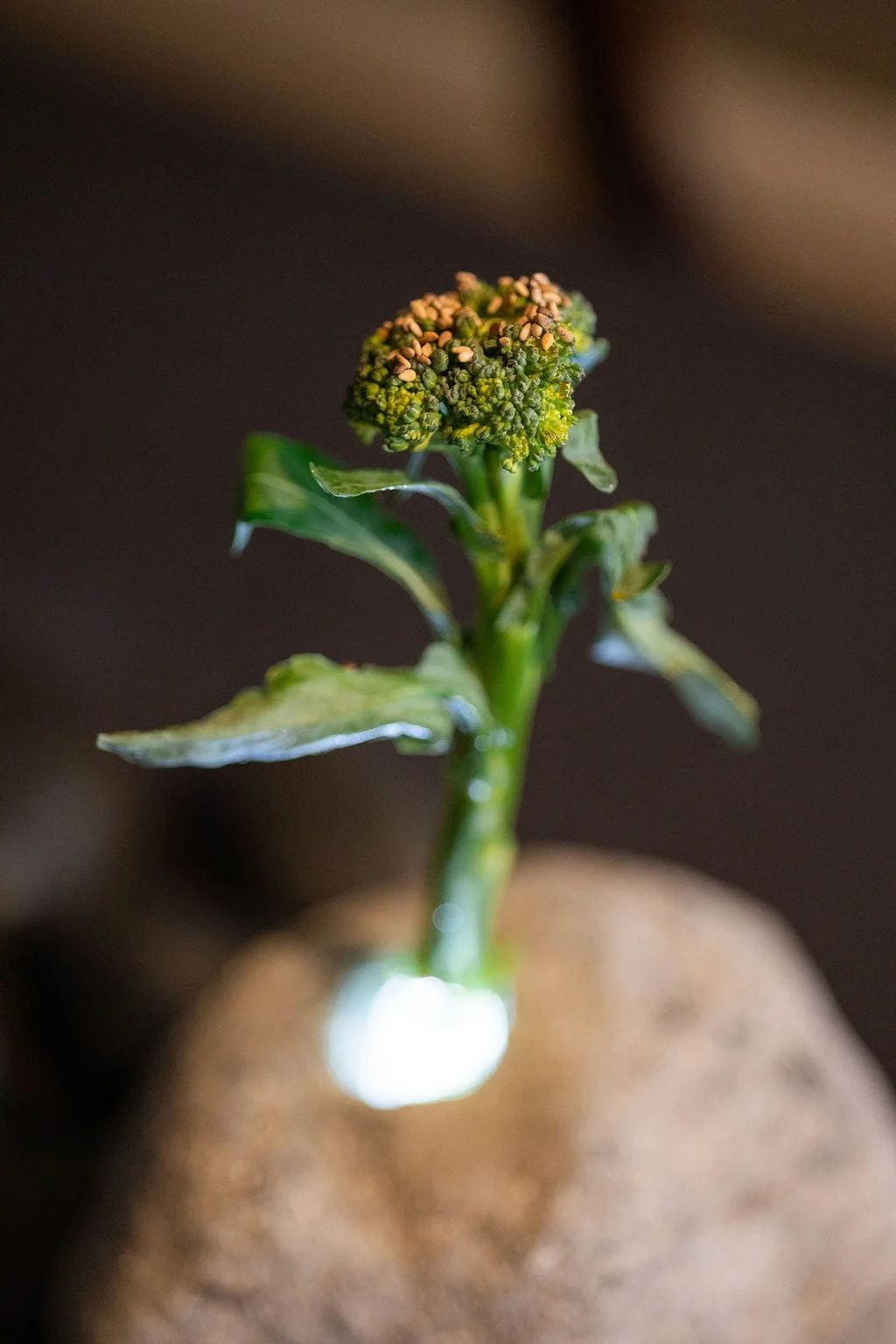
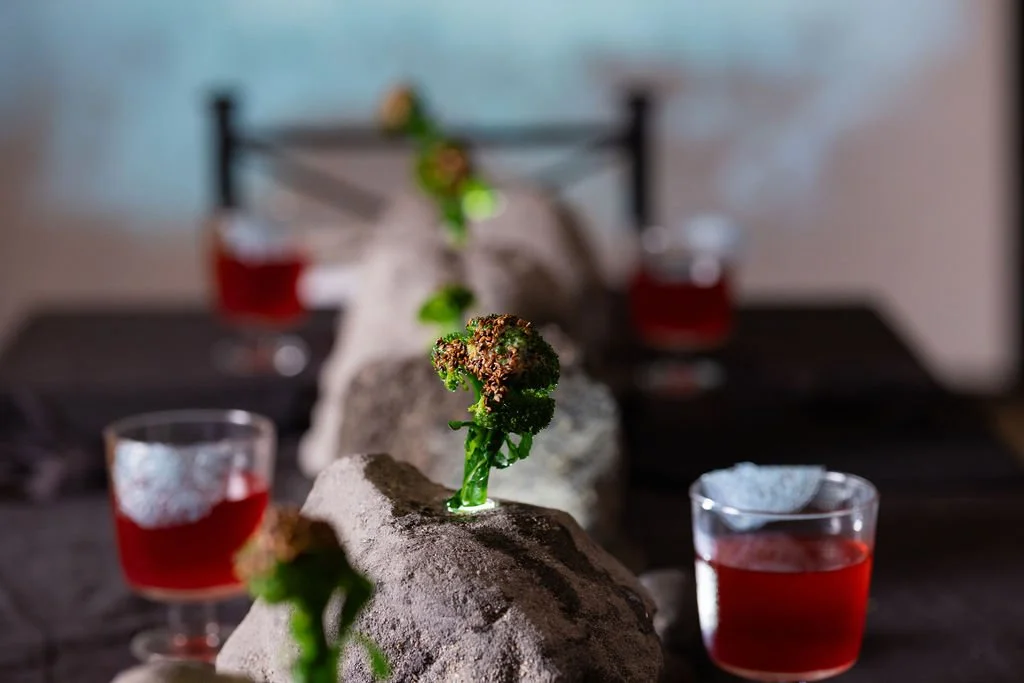
Vessels here were not sourced. Veceto cast each one by hand in concrete, made for this installation and for no other, the surface left rough where the mould was not corrected for it. Small black river stones sit at the base of each vessel, chosen because water had already finished them, nothing further required. Broccolini stands upright on each one, lit from below so that only the broccolini catches the light, not the surrounding room. Resemblance to algae was the intention, not an accident of distance: the vessels were designed to read as vegetable close up and as marine growth from across the room. Black recurs by decision, not by default. Linen and river stones were chosen in the same tone so that colour would not compete with the vessels or the projection behind them. Permission to hold colour reached only two things in the room: the broccolini under its own light, and the glass at the centre of the table.
Spatial Dramaturgy Cast in Stone and Tide
Length of black linen covers the table's full span, chosen over any reflective surface for one function: it absorbs light rather than returning it, so that only the vessels and their broccolini appear to glow. Behind the table, a large ocean projection moves across the wall. Not backdrop. It carries the same material weight as the concrete and the linen, placed to remove the boundary between the table and the sea beyond it, not to suggest one. Function alone, a spatial dramaturgy in itself, built this room as curated absence: nothing present without a function, nothing added for effect.
Blackberry and sage were chosen for colour before they were chosen for flavour: sight preceded taste in the same order the elixir itself was built. Blue pea flower carries its colour naturally, without dye, which mattered as much as the shade itself. At the rim of each glass, the blackberry and sage elixir met an icy blue pea flower lace, matched to the exact blue of the projection behind it, not to the drink. Colour arrived before temperature, before taste. Lace dissolves on contact. Elixir does not.
Inhabited, Not Observed
Events find no catering here. Each commission begins with the same question, asked of the place itself: what is already here, and what does it require. Two conditions met in one room as the answer: geological and ephemeral, stone that took centuries and light that lasted one evening. Nothing outside it mattered for the length of one sitting; the room answered only to itself. Sovereign space. Decoration played no part in the sequence. Sequence ran stone, then water, then colour, then the room. Every stage answered the one before it, in the order the coastline itself would have used.
Viewing was never the arrangement. Seating sat inside the installation, not outside it. Distance did the work here: vessels close enough to require attention, the wall far enough to require distance, and both measured before the room was built. Three zones made the room: the vessels, the table, the wall. None built to be read alone, a spatial dramaturgy in which the light beneath each vessel picked out the broccolini rather than the table, the projection changed the colour read in the glass, and the concrete gave the moving water somewhere to land.
By the end of the evening, the elixir was finished, the lace had dissolved, and what remained on the table was concrete, cooling. One entry among many, The Oceanic belongs to a continuing practice of immersive installation art and spatial gastronomy. Commission after commission, Veceto returns to the same material questions: what a place holds before anyone arrives, and what is built to last exactly one evening, and nothing longer.