
NO. 04 · TRANSIENT ARCHITECTURE
Brutalist Cake
Existed as construction before it became dessert.
I · DEMOLITION
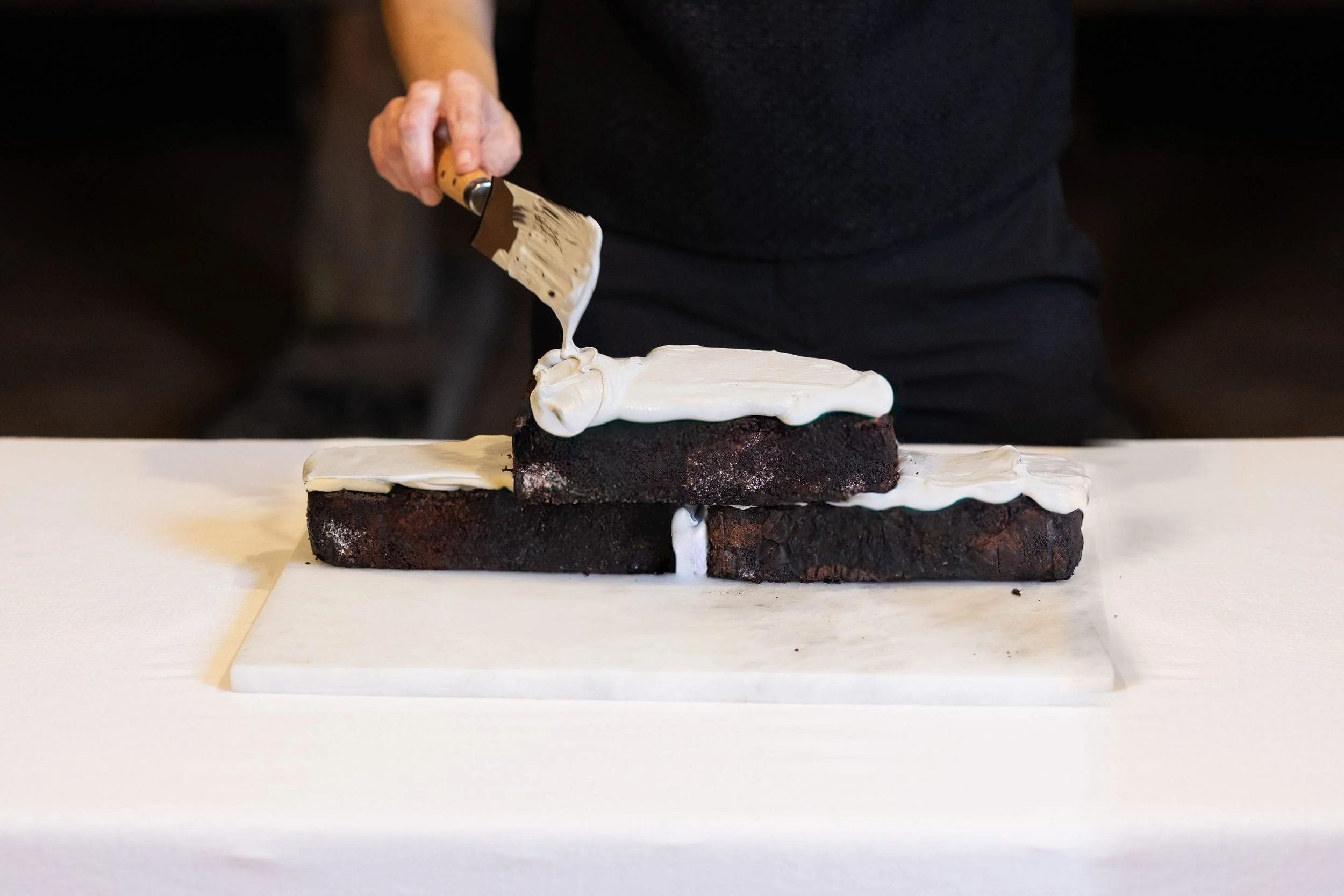
From the outset, Veceto conceives brutalist cake as a wall raised to be taken down, and eaten in the process. Every later choice follows from that single decision. Brutalism lends its candour, since raw concrete never pretends to be lighter than it is. Chocolate laid as masonry bears that same honesty into a material that cannot outlast the night. Each block begins as chocolate sponge, hollowed before it is set in place. Ephemeral art is usually measured against time. Brutalist cake is measured in labour, carried out by hand before those who will later undo it.
II · RECOGNITION
Light falls from the ceiling, and terrace doors stand open behind the work, so that the darkness outside becomes its backdrop. Evening is chosen deliberately, for the dark ground it gives. Onlookers remain a few paces back, near enough to hear the trowel and far enough to see the whole elevation. Close up, the surface registers as material; from a distance, as construction. Space scenography of this kind asks for no apparatus, only a decision about where people stand. Bare blocks of brutalist cake could pass for almost anything until grey joints run between them. Mortar is what lets the eye name a building. Once it appears, those watching read clinker and bond in stacked sponge, before anyone has tasted anything.
III · TOLERANCE
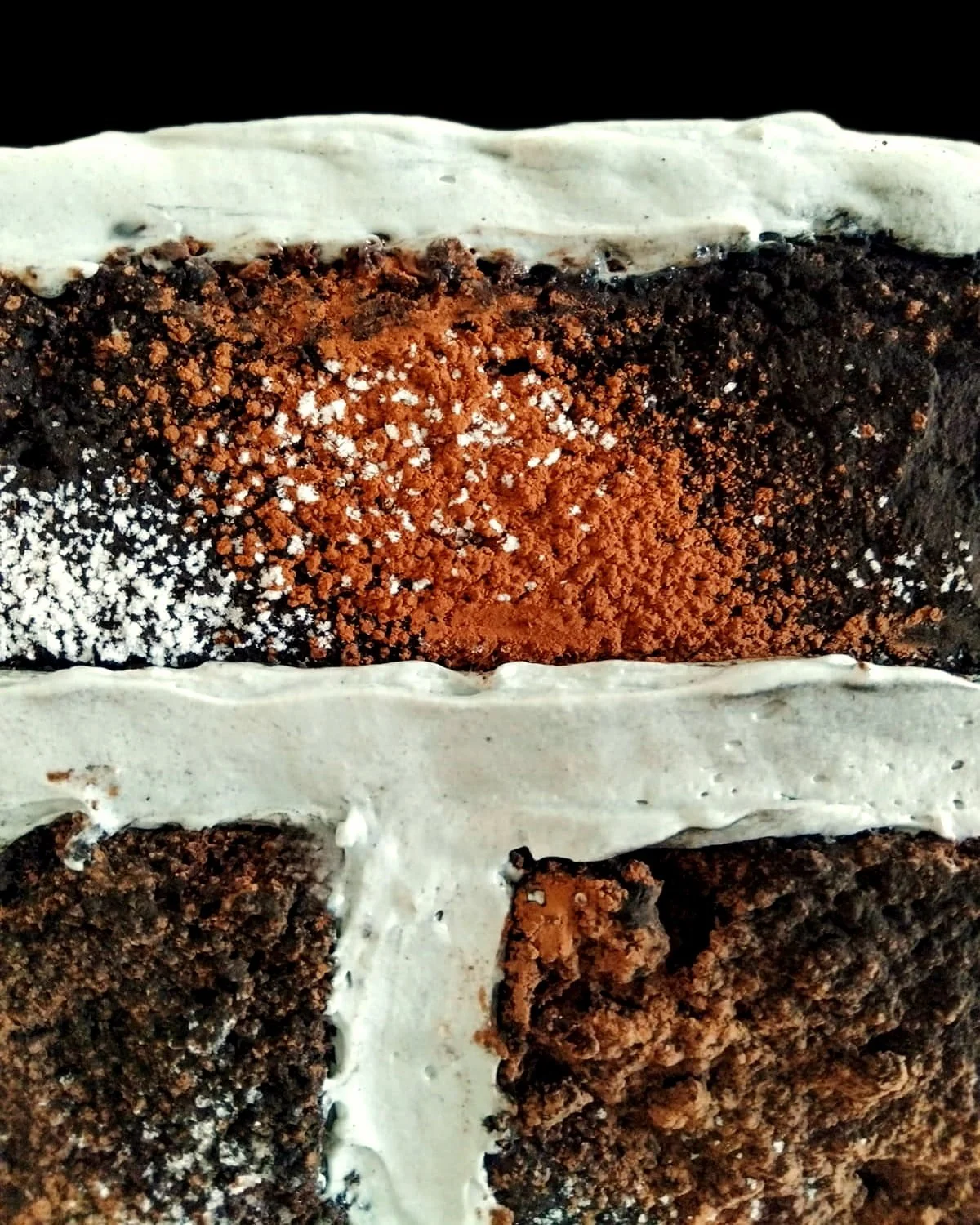
Colour is tested ahead of assembly, powder beside powder, until the surface holds the tone of fired brick. Stacking is rehearsed separately, and so is the speed at which each course draws in moisture and begins to soften. Beneath every joint lies a thin seal of marzipan, keeping the grey where it was laid instead of letting it seep through. Scale, for architectural desserts of this kind, follows the same discipline: the smallest size at which masonry remains legible. Seen as Perishable Architecture, precision lies in what binds rather than in the units held together. Down to the last crumb, the work is made by hand within a food design studio. Only the silver bowls and the tools are bought.
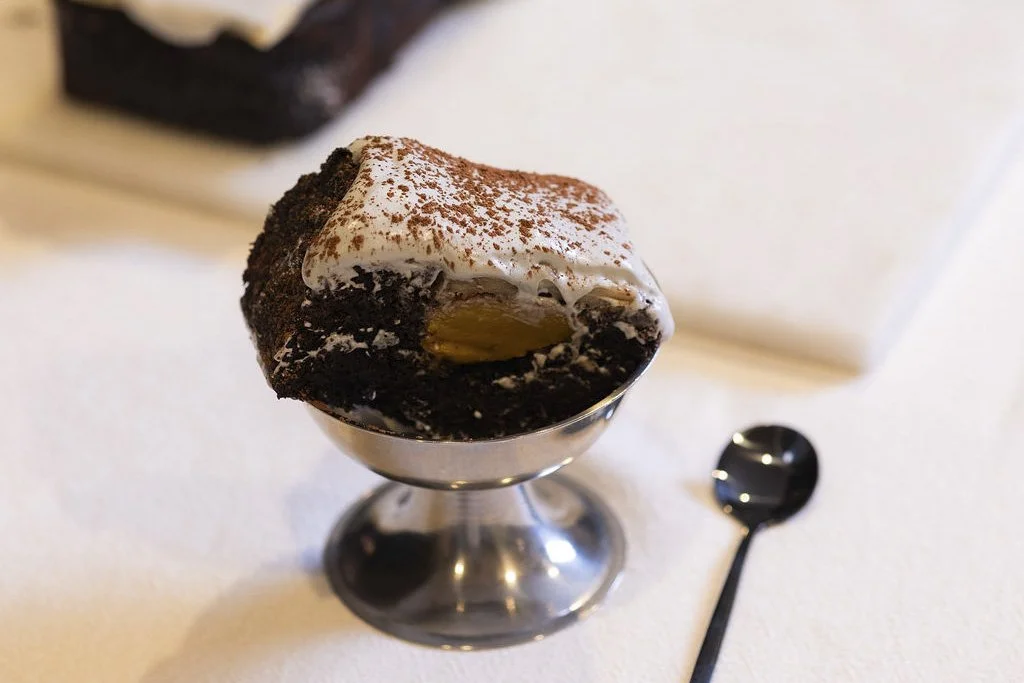
Cities usually hide demolition behind hoarding, dust and noise. Dismantling happens in full view, at the pace of a knife, among those who watched the structure rise. Kerstin Pricken makes the first cut herself, because taking a wall apart is the second half of building it. Carrying belongs to someone else: her assistant, in white gloves, brings each portion in silver from the section to the people waiting. Sound, weight and sight arrive before taste: steel through crumb, a bowl settling in the palm, a profile losing its line. Appetite continues what cutting began, and no single person could finish the dismantling alone. For a moment, brutalist cake shows each interior before it is lifted away. Completion comes at that point, once an edible object has been read, divided and shared. Among the Archive’s edible art creations, its nearest relation is one of the sculptural cakes, clad in leaf and kept whole. Architectural desserts of this order exist to be opened, and they ask everyone present to share in the undoing.