
Diminuendo
Food Still Life
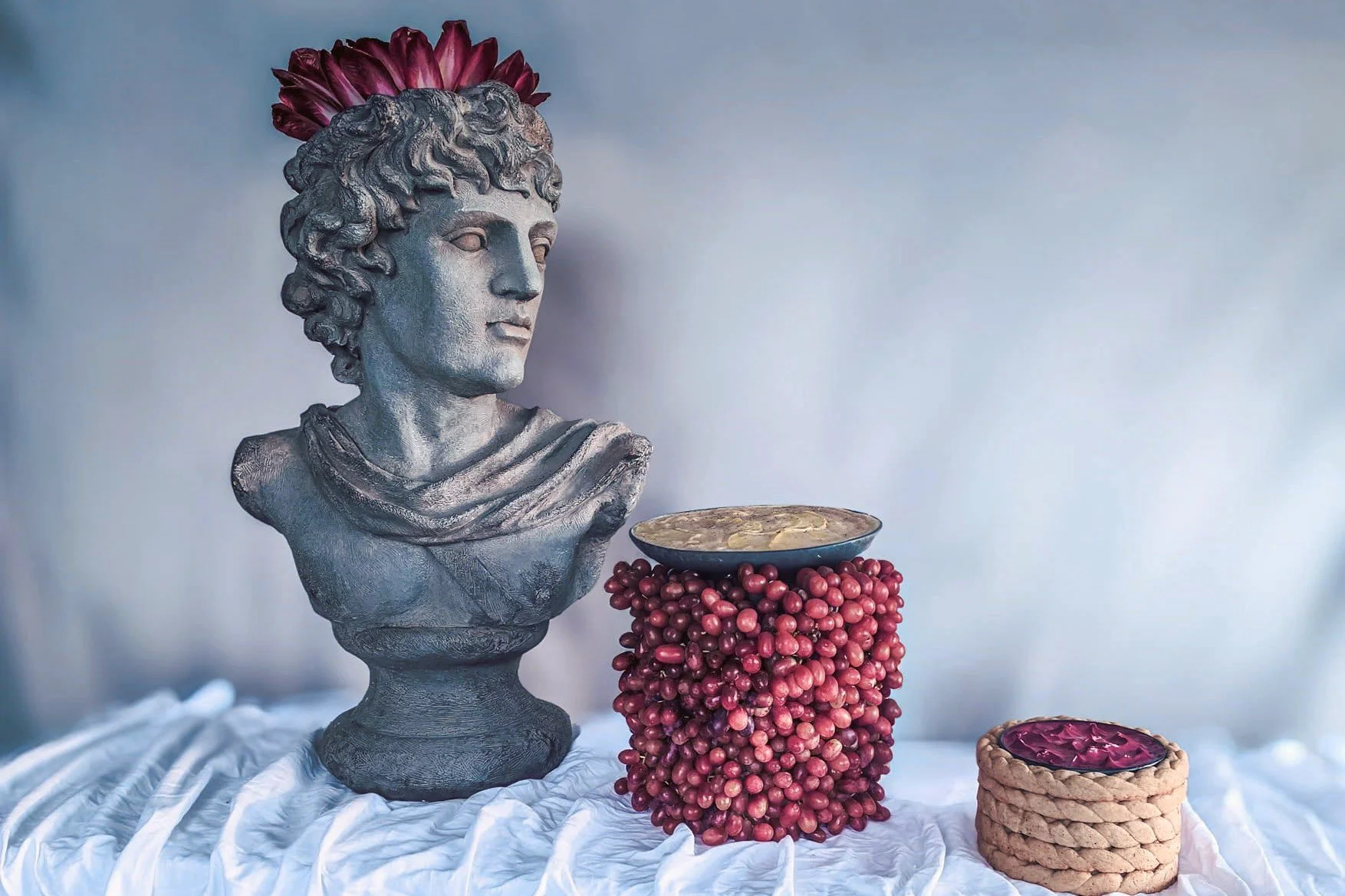
Classical grey holds all three parts of this food still life, and one colour alone is allowed to cross it. Heights descend from left to right, bust to tower to wreaths, each roughly half the one before. Pink does not descend with them. It rises from the top of the head, covers the whole column of fruit and fills the bowl above the bread undiminished. Once, a colour may pass for chance. Repeated three times, it becomes a decision. Diminuendo takes its name from the falling scale; its accent keeps a measure of its own.
CLASSIFICATION: Gastronomic still life in three parts
LOCATION · YEAR: New Zealand · 2026
MEDIUM: Stone-grey bust, grapes, braided bread
CONCEPT: Classical in every part but one.
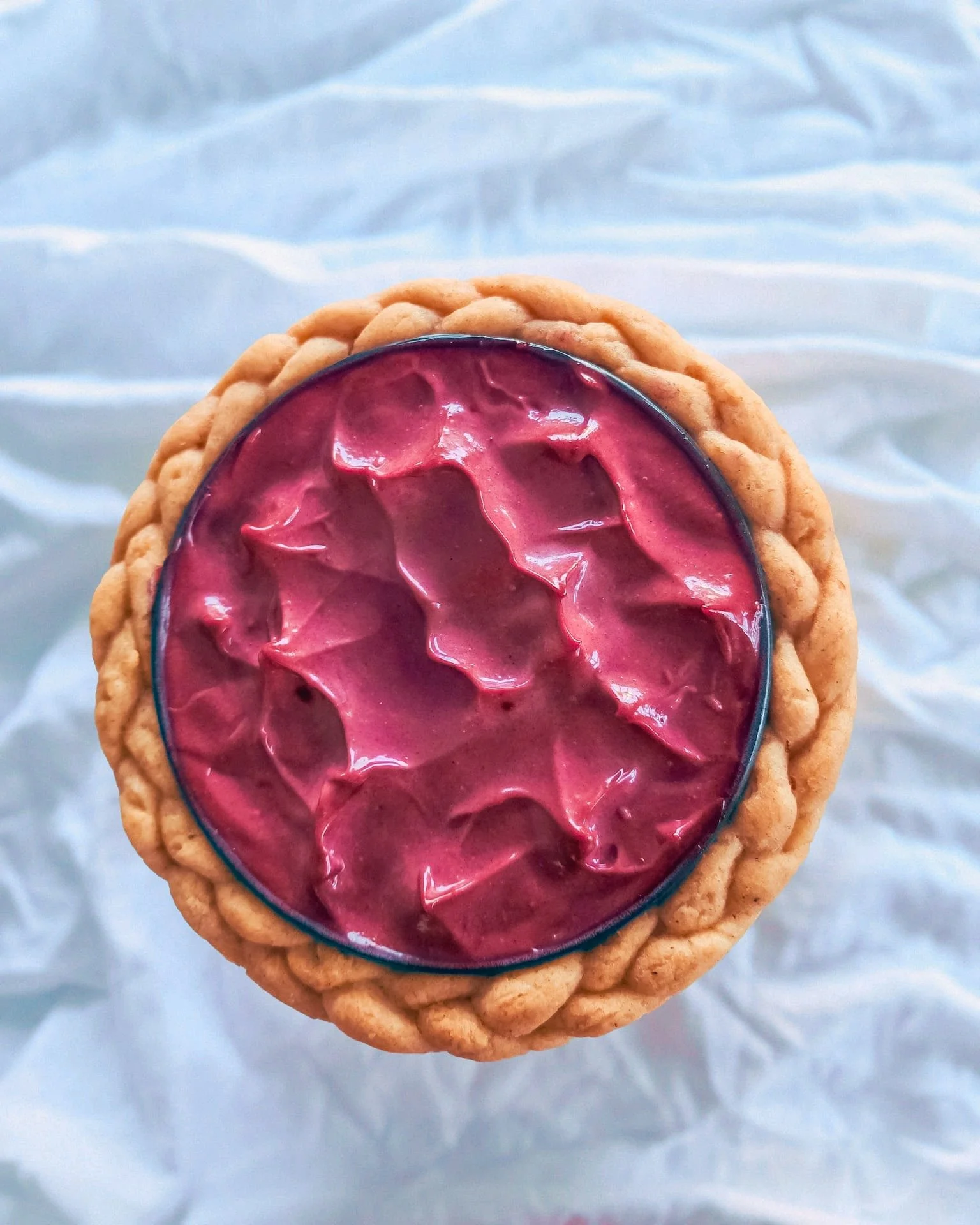
Evening arrived with lamplight spread evenly over white linen. No other object stood in view of the food still life. All three shared one line at equal depth, followed as a frieze is followed along a wall. Spatial dramaturgy depended on distance alone and settled the order before anyone moved. From several steps back, the descent formed one sloping contour. Nearer, every element acquired its own surface and its own weight, and the accent began to count. Linen gave the arrangement a quiet ground and asked nothing of it.
Antiquity lent this food still life its vocabulary and none of its subject. Bust, wreath and ash-coloured stone belong to one classical grammar, and the work spoke only in it, quoting no single model. Plaited dough replaced laurel; fruit rose where a pedestal might otherwise stand. Figure, bowls and the concealed glass arrived ready. Everything edible was made in the studio, down to each strand of every braid.
Not for the Wall: a Still Life of Food
Grapes, loaves and vessels have filled the genre for as long as it has existed, painted so that they would keep. Laid out in earnest, they were present in substance and meant for the mouth. Preservation was not their purpose. Painted, a food still life holds its composure for centuries; Diminuendo surrendered its subject within an evening. Between those two durations lies most of what the piece had to say, and it required no saying aloud.
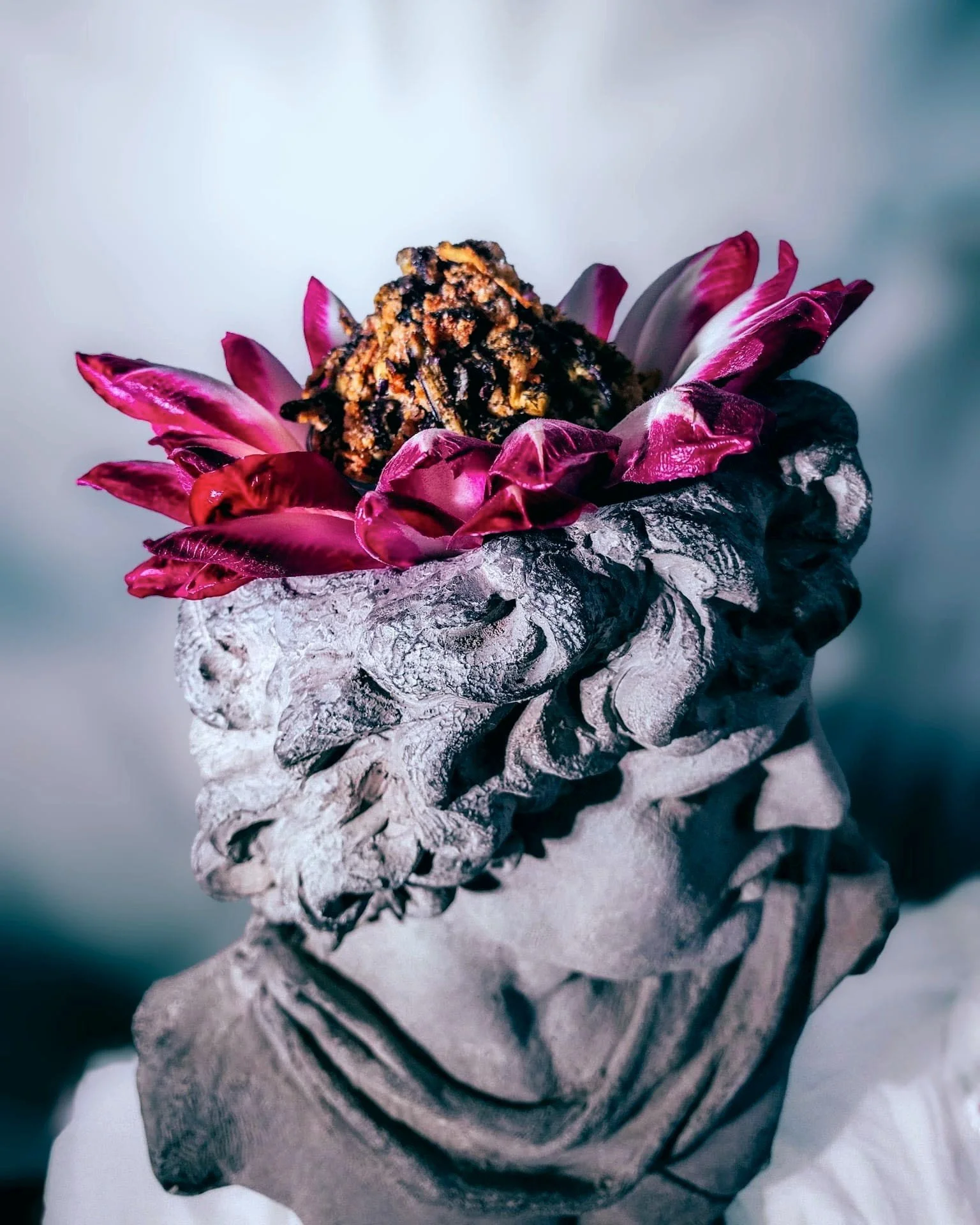
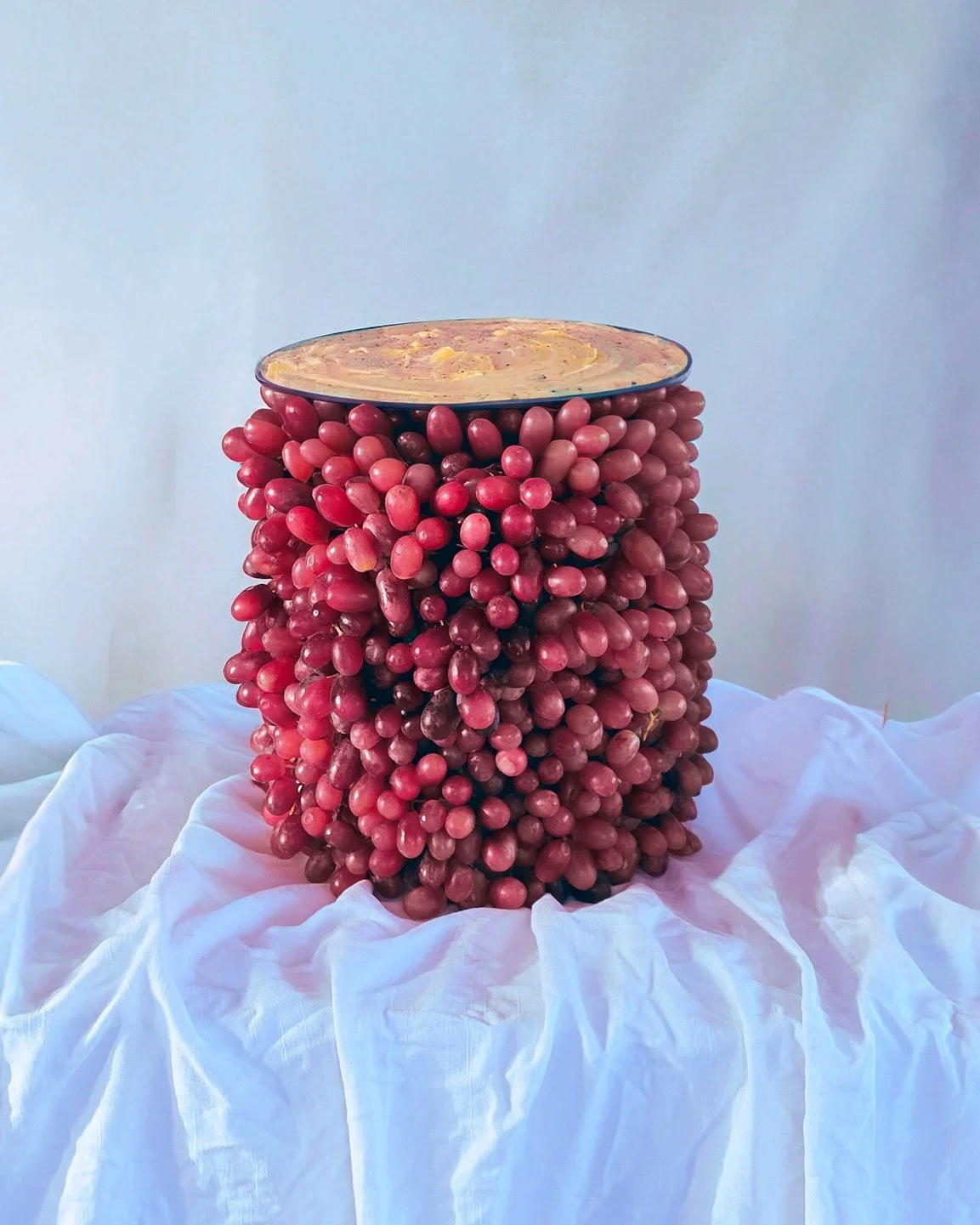
Against that inherited ash tone appeared the least antique shade within reach, and the most alive. Imposing it was unnecessary. Chicory carried it at the tips of its leaves, turned so that only the coloured edge showed. Their pale bases stayed inward, out of sight. Berries carried that blush whole and lent it its widest field in the centre. Beside a figure from antiquity, so common a hue acquired the gravity of statuary.
Height lowered its voice from left to right. One note held at every level. Read as one score, the three bore a single instruction, written in one register and broken once. Across all of them, no element spoke louder than its neighbour. Only that tint refused to soften. Halving between them was approximate, not measured to the centimetre. Essential was only that the eye registered a fall, and registered just as clearly what did not fall with it.
Measured by Eye and Hand
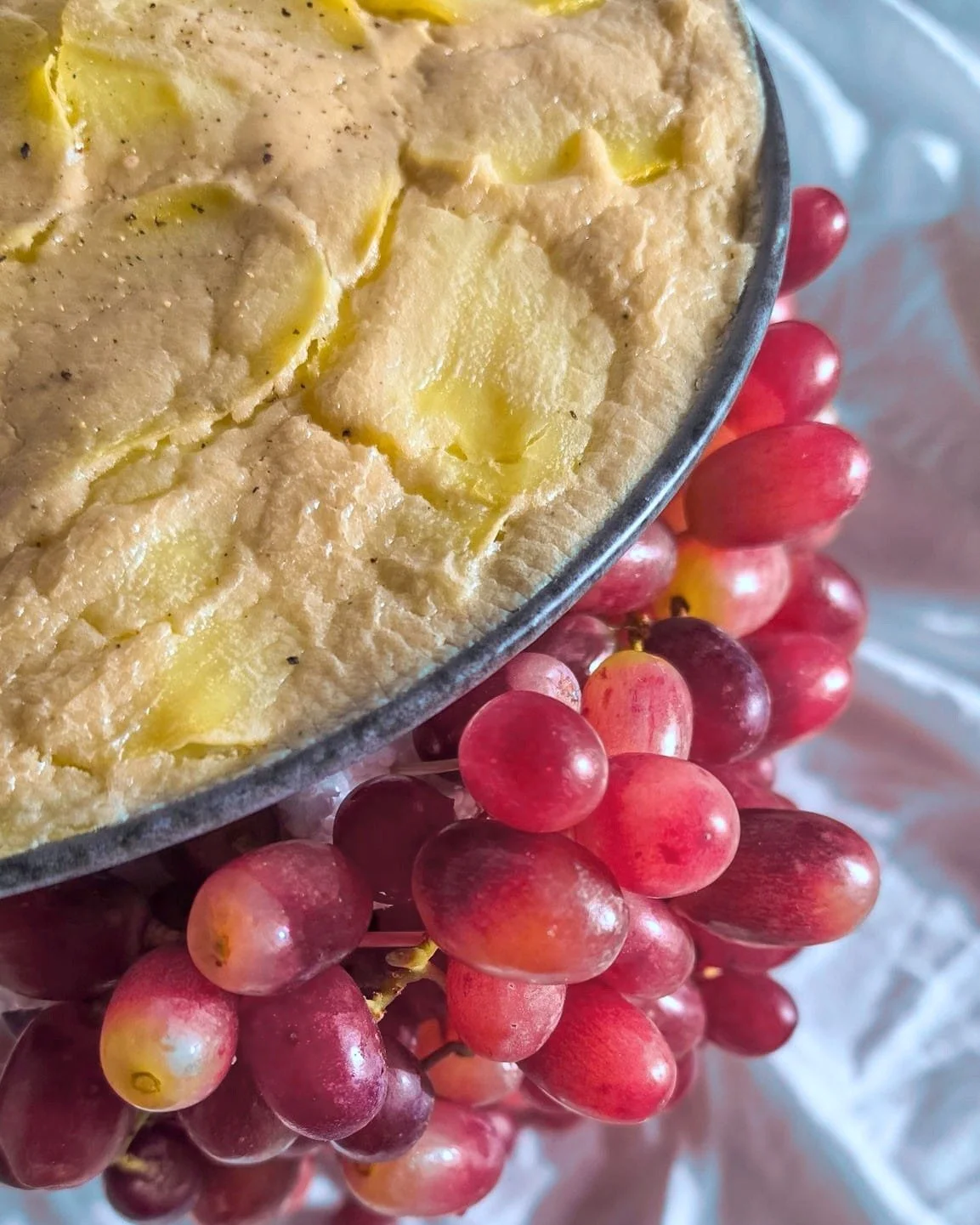
Tone was settled before anything was assembled. Aioli was brought towards the shade of grape and chicory, then judged against both, side by side. Peaks were raised in it with a spoon, set down and lifted away until the texture set. Three materials stopped reading as separate things and became one hue at three levels. Darkness needed equal care. Strips of aubergine, breaded and fried, curled in the oil and rose from the crown like a crest. Nori finished them, kept them darker than everything around them, and gave them a flavour of their own.
Neutrals, too, were weighed. Stone on the sculpture and slate in the bowls sat a degree apart. Near as they were, two materials still read as two. Unpatterned cloth let that small difference rest, and neither surface looked wrong.
Standing mattered as much as tint in a still life of food built upward. Every stack was tested under load beforehand. Inside the head, a glass vessel held the strips in place, hidden beneath the leaves. On the middle part, the gratin never sat quite flush with the rim, as first planned, and it stayed so. Wreaths of braid took the weight without giving at the plait.
Bread took the lowest position as a foot, never as a dish. Each wreath was braided on its own and laid on the one beneath. At a distance the stack looked like one low drum; up close, it divided into rings. Clusters climbed from the cloth to the rim above them, one over another. Nothing joined the three parts except the line they stood on. Over the plait, that last bowl sank flush into the highest ring, a tolerance judged by eye and fingertip.
When the Crown Was Taken
Recognition came first: none of the tableau was on display, all of it was there to be eaten. Then a hand reached into the crest, and the sculpture became a vessel being emptied. Later, the tower came down one berry at a time, and the blush lost its widest field. What remained afterwards was not photographed.
Nearness, not size, made the work immersive. Anyone before it had to approach close enough to touch, then closer still to take. Multisensory reading needed no staging: grape skin, a crisp crown, aioli yielding to a spoon. As conceptual food art, it argued through appetite rather than explanation. Veceto, the food design studio behind it, built a food still life to stand in grey and to leave in pink.
Accepted as a commission only where one colour is allowed to decide.