
Envoi
Edible Invitations
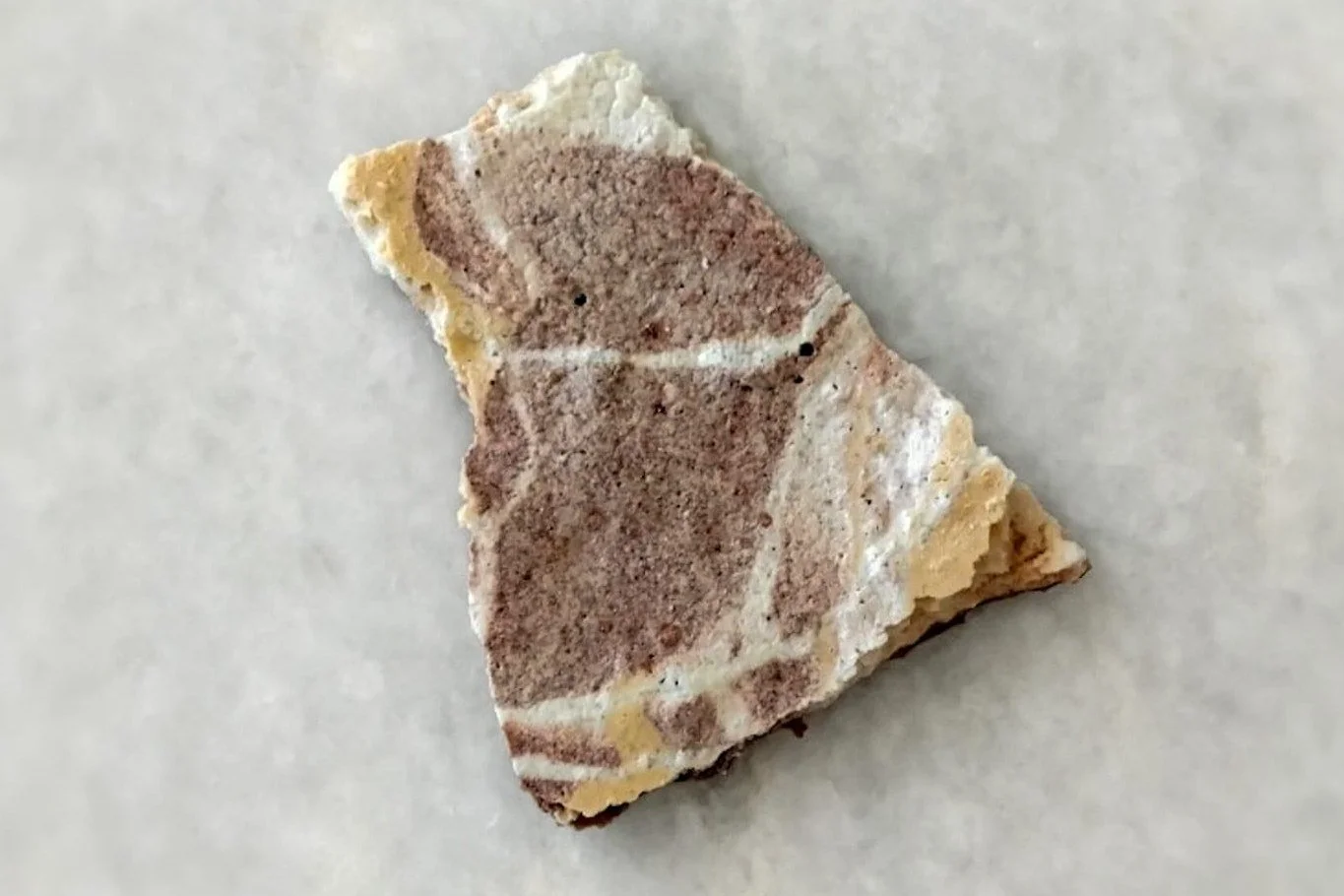
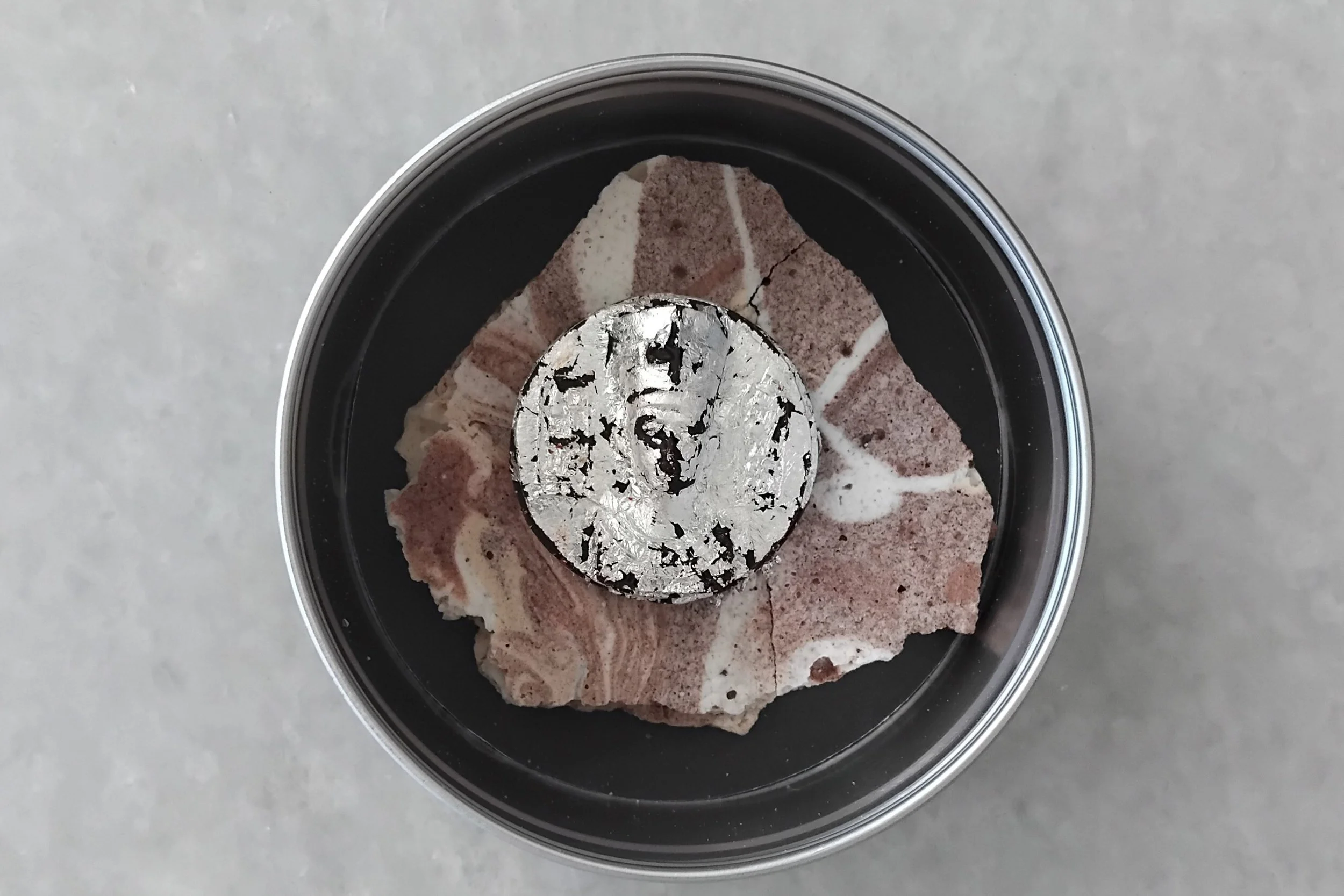
Sent ahead of an evening, these edible invitations arrived as stones, and acceptance meant breaking them. Veined stone was chosen for the weight an announcement should carry. Each piece travelled boxed and cushioned, fragile in fact, monumental in appearance. Inside a black coffret, a coin in silver leaf lay beside the fragment like a find from a dig. Recipients took this trompe l'oeil food for rock and paused before the first break. Veceto matched every surface by hand for a single occasion, so no veining repeated itself.
CLASSIFICATION: Boxed trompe l'oeil edition
LOCATION · YEAR: Tauranga · 2026
MEDIUM: Marbled meringue, silver leaf, black metal
CONCEPT: Stone in appearance, an invitation in substance.
Invitations in fashion are kept, pinned, photographed. Stone, in this edition, was asked to be eaten instead. Gravity decided the material: a veined surface gave the announcement a seriousness no printed card could borrow. Paper would have informed; a stone had to be weighed in the palm before anything was decided. Wording for the occasion lay beneath the coffret, never inside it, so the object met the hand alone.
Distance shaped these edible invitations before any room did. Delivery was by hand. Between studio and doorstep, the pieces had no architecture but their own enclosure. Its lid worked as a threshold and its dark interior as a chamber. Black card, cut to a disc, lined the floor. All the spatial dramaturgy fitted within a few centimetres: dark below, veined surface in the middle, a hand reaching in from above. Silver held whatever light reached it, while the matte ground beneath it gave nothing back. Held that close, it was an intimate experience first, and only then an immersive one. Bought rather than made, it served twice. Practical first, it protected edges that would not have survived a careless journey. Ceremonial second, it turned opening into disclosure: a casket lifted, not an envelope torn.
Opened, the edible invitations were taken for quarried rock and held accordingly. As trompe l'oeil food, each piece asked to be misread before it was understood. Hesitation followed, the pause of someone invited to damage what looks permanent. When the break came, it was audible, and the edge it left was porous where a true slab would have been clean. Only breaking it could settle what it was.
Read by the Mouth: Trompe l'Oeil Food
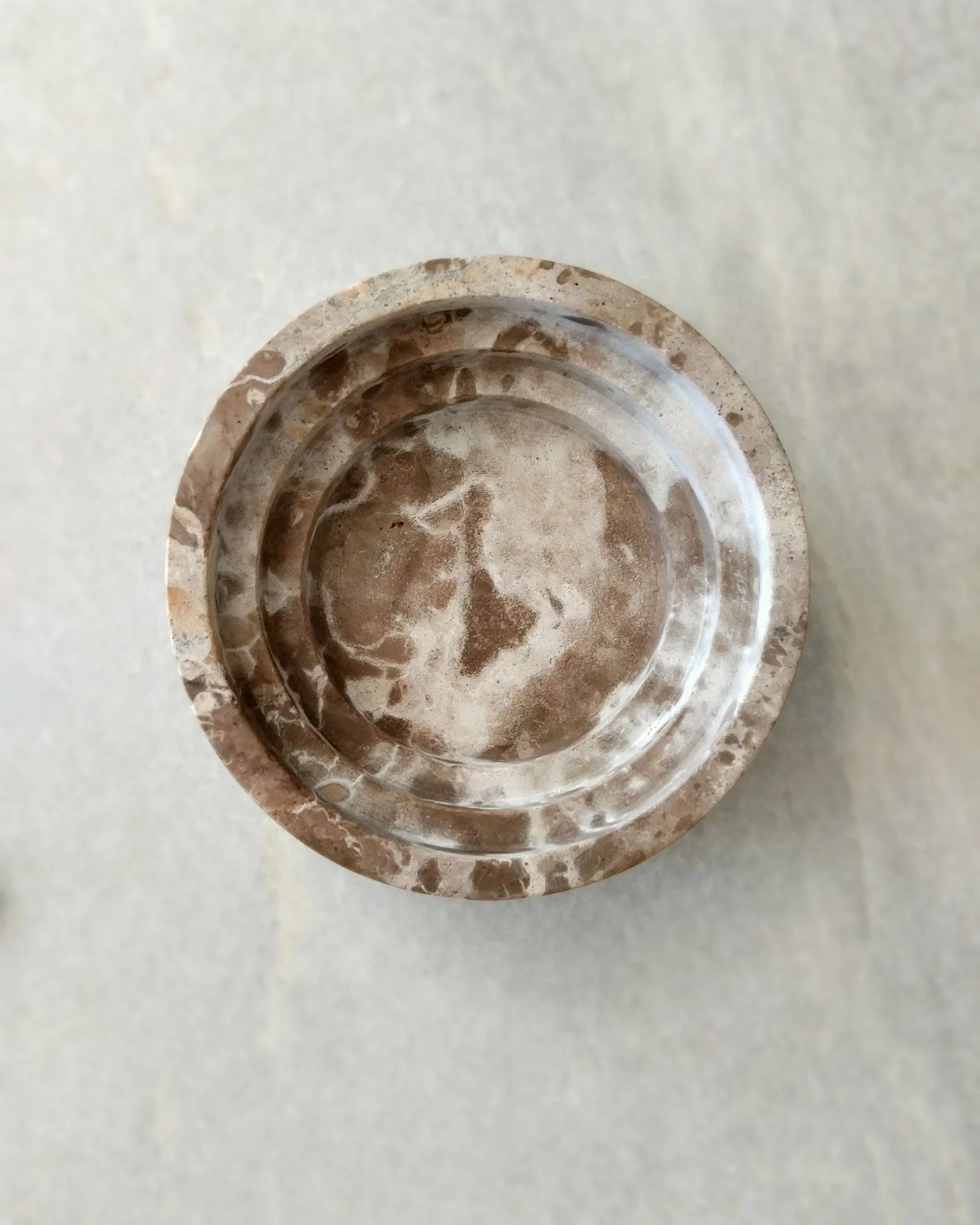
Culinary trompe l'oeil worked as method, not trick: whatever the eye decides, the mouth revises. Nothing was quarried for these edible invitations. Grain was read from a marble vessel and matched freehand in meringue. Source and likeness never travelled together. Heavy and indifferent, the vessel stayed behind while its likenesses left, each answering to it without copying it. Long before the edition, that vessel already stood in the studio. Neither white nor black, the colours such slabs are usually expected to wear, it ran warm brown crossed with cream. Choosing it meant imitating a mineral without a familiar name, so the eye had no catalogue to check it against. Recognition had to come from the material alone: weight, grain, the cold look of something quarried.
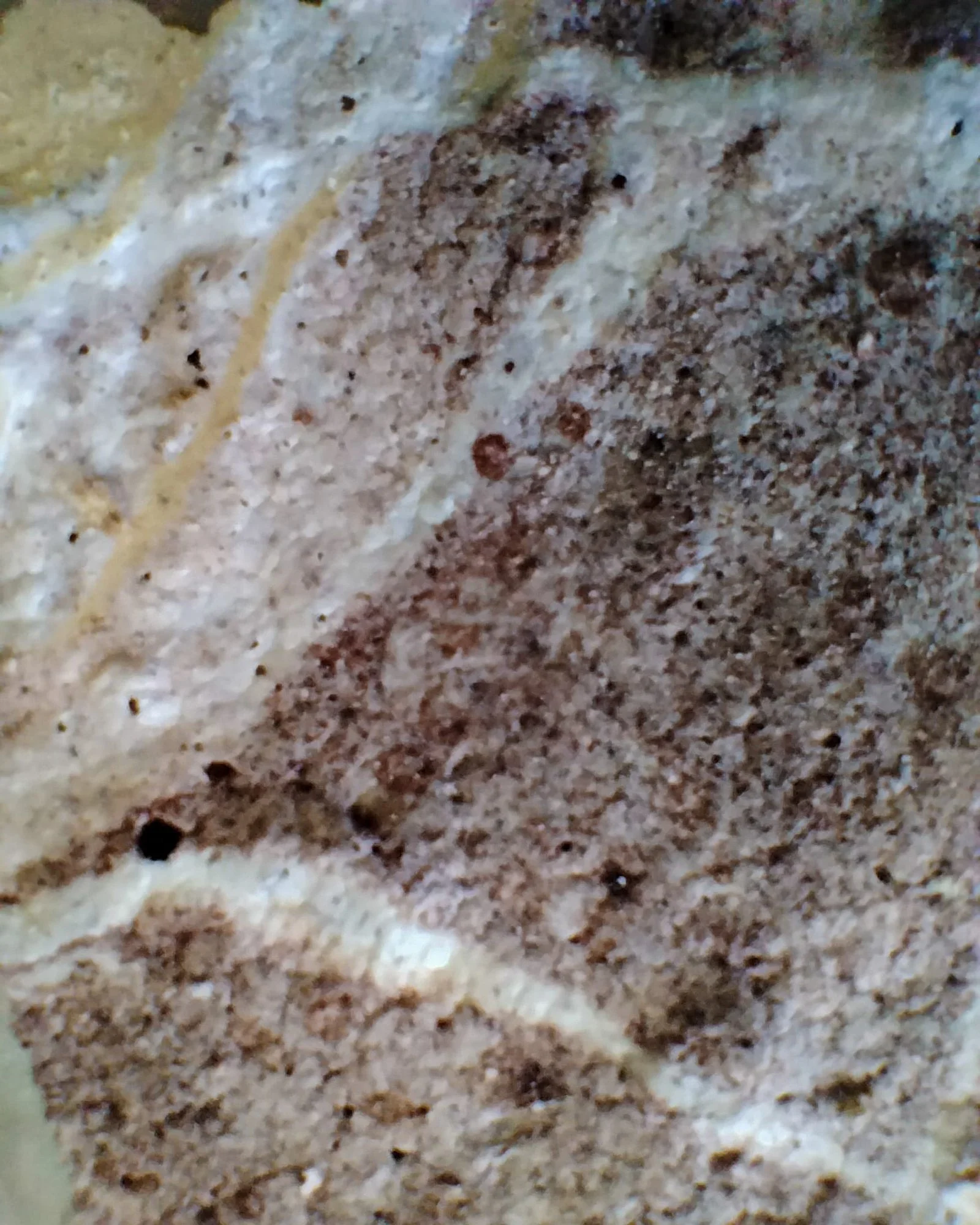
Before anything was sent, veining was practised on trial pieces until the lines sat inside the material rather than on it. On the day of making, the mixture was adjusted several times. Browns had to stay warm and veins pale. Drying was tested for how long a surface would hold its matte, and the journey for whether an edge would arrive intact. Veining had to hold at arm's length and again at the distance of a breath, where pores give most imitations away. Last came the bite: every piece had to break as rock does, then give way as nothing mineral could.
Time belonged to the brief as much as matter did. Handed over weeks ahead, the pieces had to wait unchanged. Surfaces that softened would have told the truth too early; edges that crumbled would have ended the deception in transit. Holding still was part of the craft, so that undoing could take seconds.
Beside the fragment lay a coin made in the studio, finished in silver leaf, its motif borrowed from antiquity. Placed as a find rather than a token, it turned the pair into an excavation in miniature. Read together, they were evidence of a gathering that had not yet taken place. Coin and stone were made as one piece of object design.
Where the Invitation Went
With the final fragment, the announcement ceased to exist anywhere except in the evening it had summoned. No one was asked anything afterwards. What anyone tasted, remembered or misremembered remains theirs, and the studio's share of the work ends at the lid. Records of the edition stay thin, limited to a few photographs, this page and the recollections of those who ate their invitation.
Within Veceto’s conceptual food art, edible invitations mark the smallest scale the practice takes. Curated absence governed what lay inside: marble without its weight, a coin without its currency. Sight, touch, sound and taste arrived in that order, a multisensory sequence no one had to announce. Made by a food design studio for a single evening, the edition kept its whole argument within the span of a palm.
Continuum holds the longer reading: Edible Sculptures and the Anatomy of Deception.
Commissioned as an edition only when the announcement is meant to be broken.