
Mycelium Cellar
Sculptural Food Installation
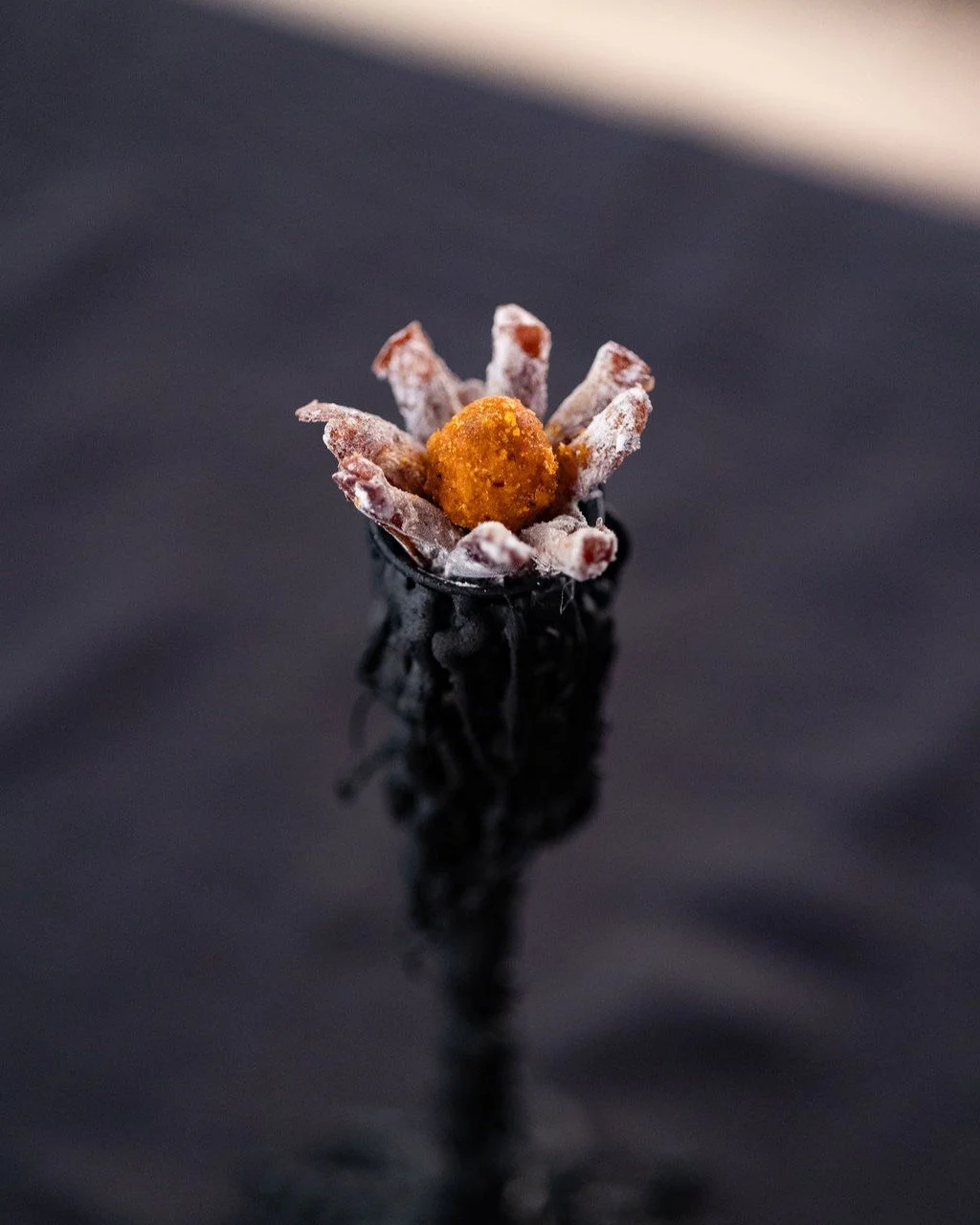
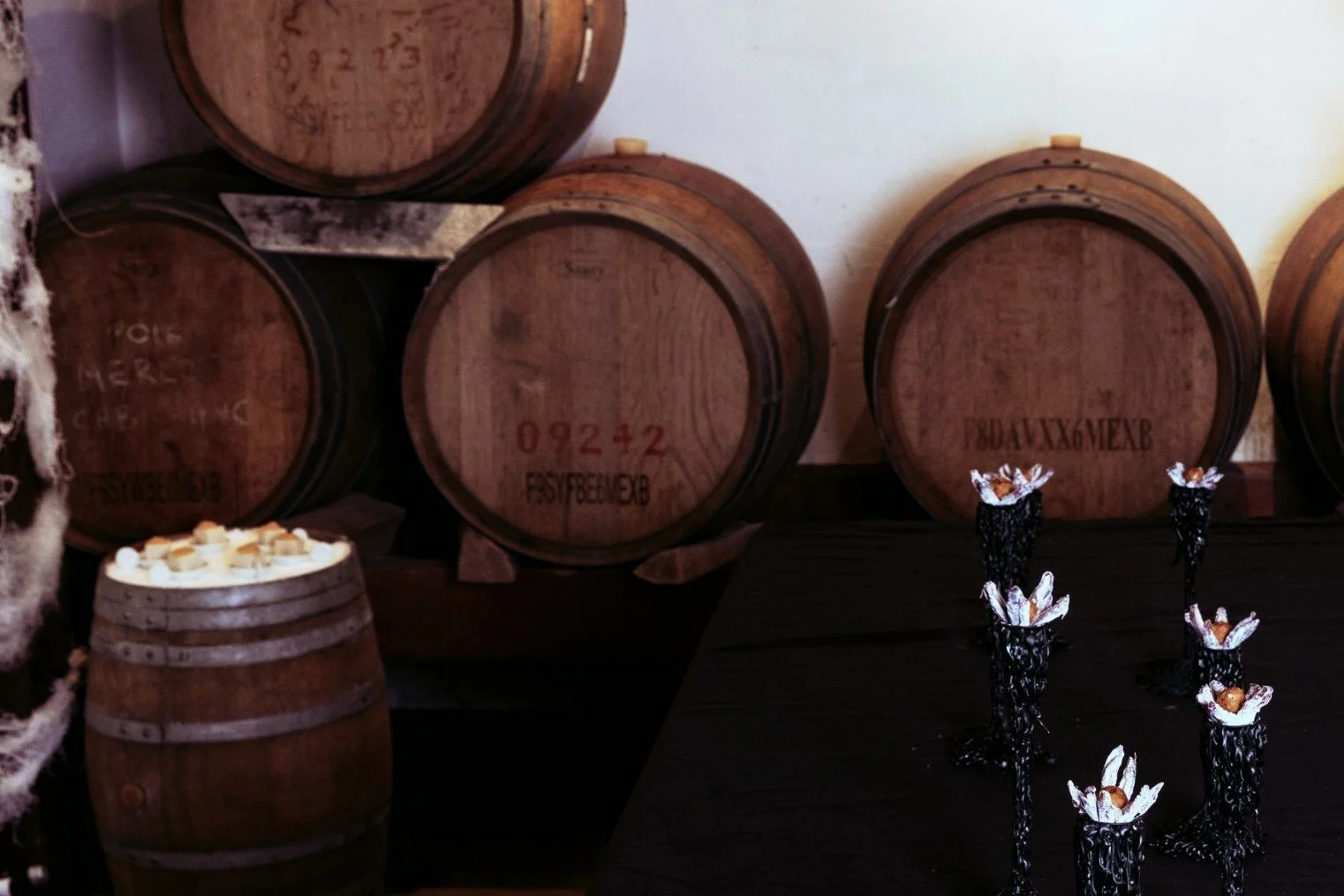
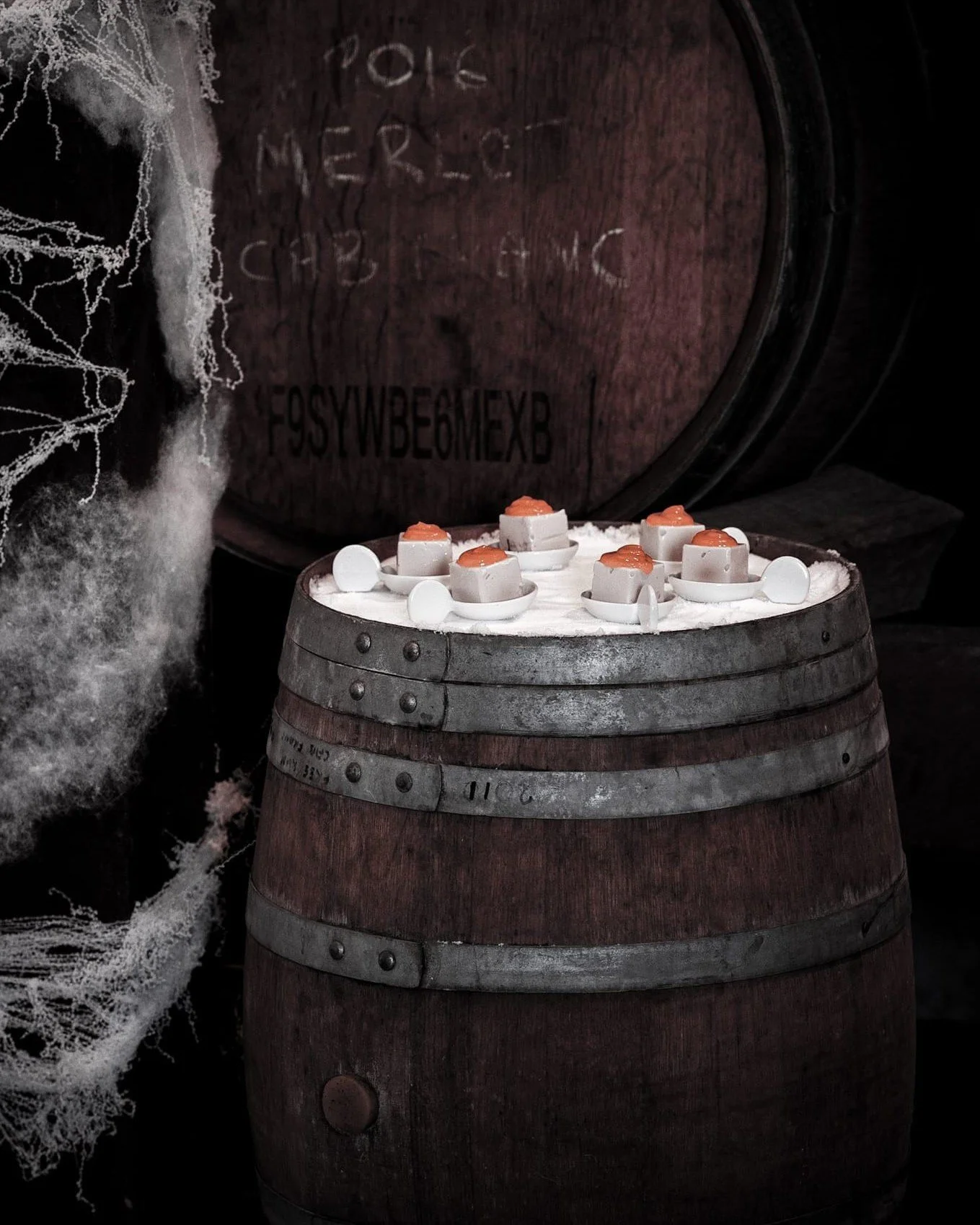
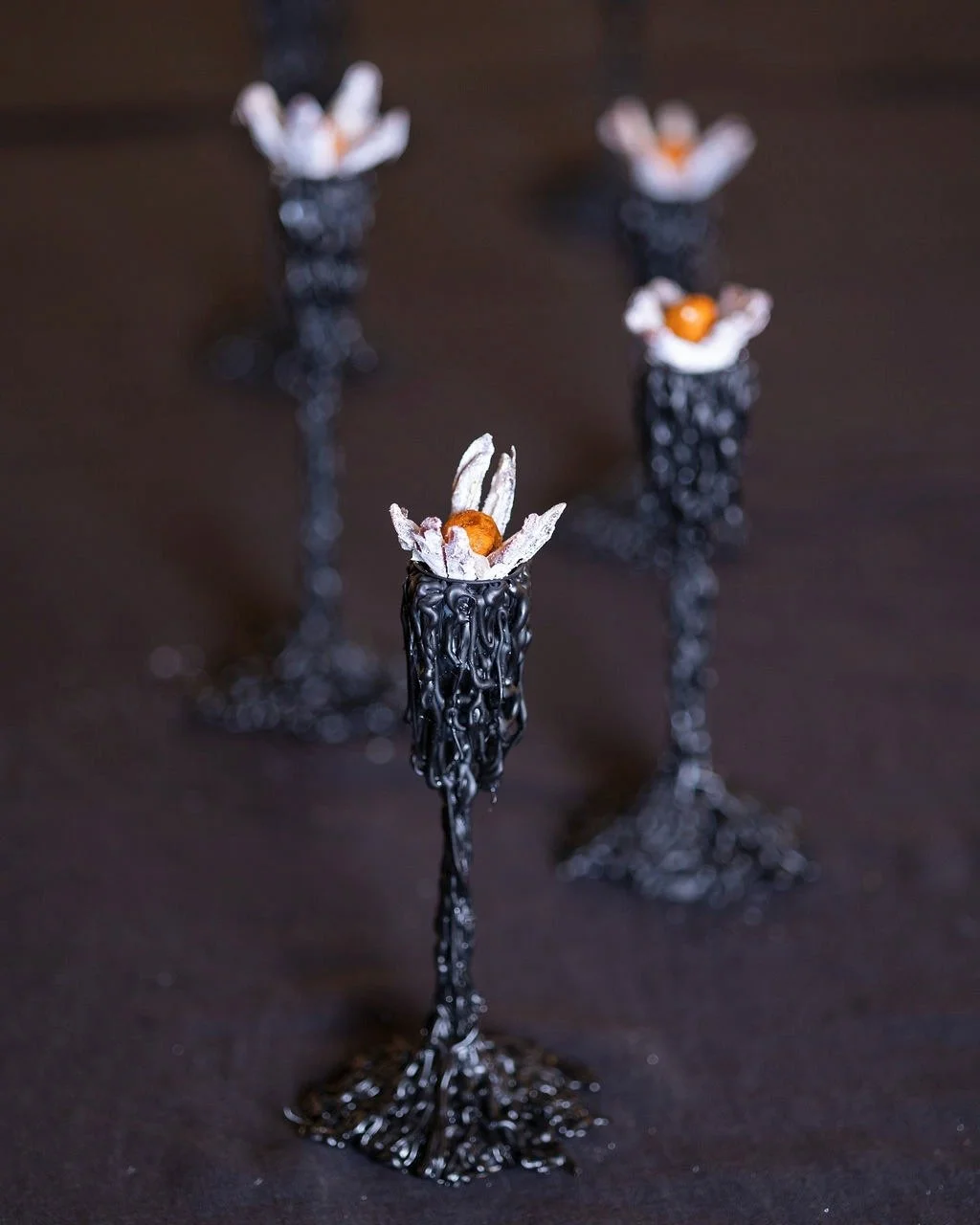
Inside a working wine cellar, Veceto set a sculptural food installation as a neoclassical still life about ripening. Wine and spores share the same damp; only one of them was ever invited. Arranged like a cabinet of curiosities, wax, salt and fibre read as mineral from the doorway. Up close, they read as something edible. Symmetry met a room built for waiting. Darkness framed it; orange marked a single point of warmth. Contact revealed what sight had misread. Quiet held the room from the first hour to the last. Kerstin Pricken conceived it as a study in time and disguise.
CLASSIFICATION: Ephemeral Art Installation
LOCATION · YEAR: Aongatete · 2026
MEDIUM: cauliflower, dates, wax, wool, wood, salt
CONCEPT: Neoclassical Ripening Still Life. Damp beneath a house, wine matures and raises spores alike. Wool and cotton stood in for the second.
Cellars are built for waiting. Bottles rest in them for years before anyone asks what they have become. Habit rather than theatre governs such rooms. Into one of them came a sculptural food installation. Gallery light would have framed it as conceptual food art. Cellar light left it closer to what it was: something placed in time, not on display.
Neoclassical order arrived with the work. Its symmetry belongs to rooms that expect to outlast their owners. Set beneath a house, that expectation turns quiet and slightly ironic. Order holds its line while everything around it changes. Black and white kept the composition in restraint. Orange entered once, as a warmth older cellars reserved for ceremony.
Among the earliest domestic architecture built for slow change were wine cellars. Greek and Roman households set rooms aside for time and humidity alone. Such rooms sat low, where damp gathered first and stayed longest. Classical order followed that lineage; it invented none of its own.
Ripening was the subject from the beginning. Moisture does not distinguish between what is kept and what is feared. Vintners count in years; spores count in days. Silence governs both, and both change what they touch. Patience is the only instruction a cellar gives. Still life painting has always kept this tension close: ripeness shown at the moment before decline.
Overhead, growth was suggested and never grown. Lines of fibre crossed the beams where spores might have travelled. No fungus was cultivated for the room. Wool and cotton were enough. Threads held still while the air moved beneath them. Imagination completed what the material only began. Suggestion carried more weight than proof.
Edible material refuses the collector's oldest wish. Keeping is impossible; only witnessing remains. Preservation, the purpose of every cellar, met its opposite inside its own walls. Quietly, that contradiction became the ground the work stood on. Memory is the only archive such work enters.
Wax and Salt, a Cabinet of Curiosities
Collectors once filled a cabinet of curiosities with things that were not quite what they seemed. Coral posed as stone; shells passed for porcelain. Looking slowly was the point. Within the cellar, edible things took up that old habit of disguise. Dates held the composure of porcelain. Salt lay as though quarried. Error came first; correction followed only on contact.
Nothing in the room looked more permanent than wax. Arrested mid-fall, its drip would never move again. Borrowed from an ordinary flame, it belonged to a light that never came. Permanence was only lent. Whatever looked most durable lasted least. Deception stayed quiet and never insisted.
From the doorway, the room read as an immersive study in near monochrome. Distance flattened everything into stillness. Proximity undid it. Touch, scent and taste arrived in turn, and the picture became a multisensory register. Knowledge of the work depended on how close one came. Nowhere in the cellar could all of it be held at once.
Spatial dramaturgy began with what already stood. Beams, barrels and stone were treated as collaborators, never as backdrop. Light arrived as the cellar allowed it. Little was rebuilt for the work. Instead, the sculptural food installation followed what the cellar had already decided about scale and light. Curated absence did the rest. What was left out held the room as firmly as what was brought in.
Maturity never announces itself, and neither did the room. Crystals would draw damp from whatever they touched. Handled, wax would lose its composure. Opened, a date would not keep its shape for long. Materials kept their own clocks, and none was asked to stop. Emptied by the end of the evening, this cabinet of curiosities kept nothing for itself. For that hour alone, damp and time had arranged its particular state.
Other rooms keep other conditions; site-specific commissions begin with them.