
The Oceanic
Immersive Installation Art
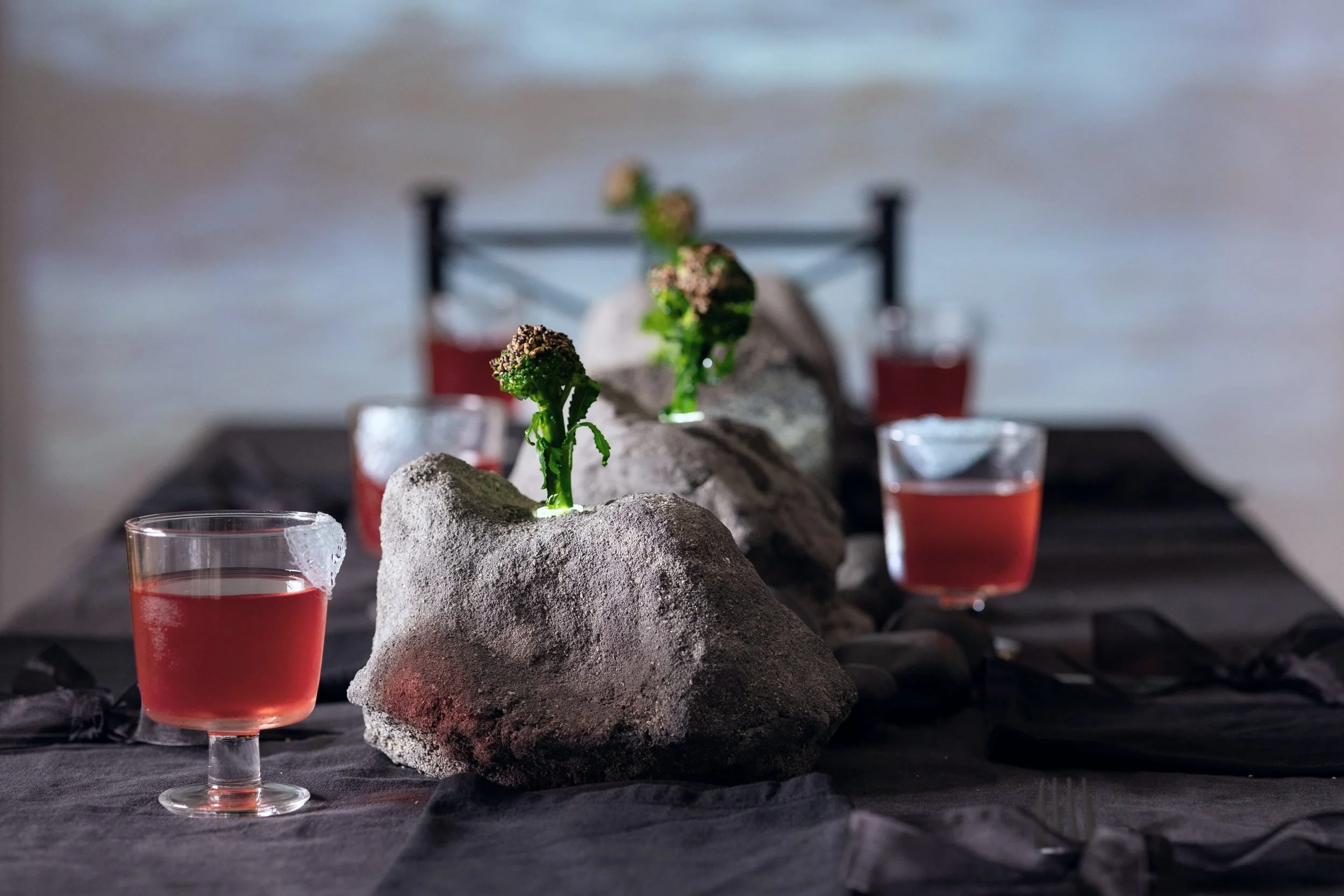
On a stretch of coastline, Veceto shaped The Oceanic as immersive installation art about what lasts and what does not. Stone came from water that had finished with it; light arrived for one evening only. Between them stood handcast vessels, a projected tide and a single glass of colour. Made for this work alone, each vessel carried its light inside. Kerstin Pricken let the shoreline set the terms. Materials answered to the coast rather than to a brief. Seen from the doorway, land and sea exchanged places. Each element stood where spatial dramaturgy placed it.
CLASSIFICATION: Littoral Installation
LOCATION: Matahui · Year: 2026
MEDIUM: Concrete, broccolini, river stone, elixir, lace, light
CONCEPT: Stone shaped by centuries. Light that lasted one evening.
Coastlines hold their own order long before a work arrives. Tide, stone and light keep a schedule no calendar sets. Starting from that order, Veceto let the shore decide what the room would hold. No brief came first; a place did. Littoral describes the narrow band between land and sea. Belonging fully to neither, it is never the same for long. Such ground suited site-specific installation art, made to be entered once.
Land art has worked with the shoreline for decades. Robert Smithson's Spiral Jetty disappears beneath the Great Salt Lake and returns when the water falls. Andy Goldsworthy builds with the tide and lets it take the work back. Both accept that the sea finishes what the artist begins. Indoors, that agreement changes shape. Water cannot be invited in, so its behaviour has to be translated.
Time runs at different speeds on any shore. River stones carry centuries of water in their surface. Evening light lasts a few hours and is gone. Neither was ranked above the other. Geological patience and ephemeral presence shared the immersive installation art without hierarchy. Duration became the material most carefully handled
Spatial Dramaturgy Cast in Stone and Tide
Viewing was never the arrangement. Those present stood inside the work, not in front of it. Inside the room, immersive installation art became a condition, never a spectacle. Attention moved by distance. Near things asked to be looked at closely; far things asked to be taken in whole. Sovereign space followed: for the length of the evening, nothing outside the room had a claim on it.
Sequence followed the coast itself. First came stone, then water, then colour, then the room around them. Every stage answered the one before it. Decoration played no part in that order. Function alone decided what stayed, and what was left out mattered as much as what was brought in.
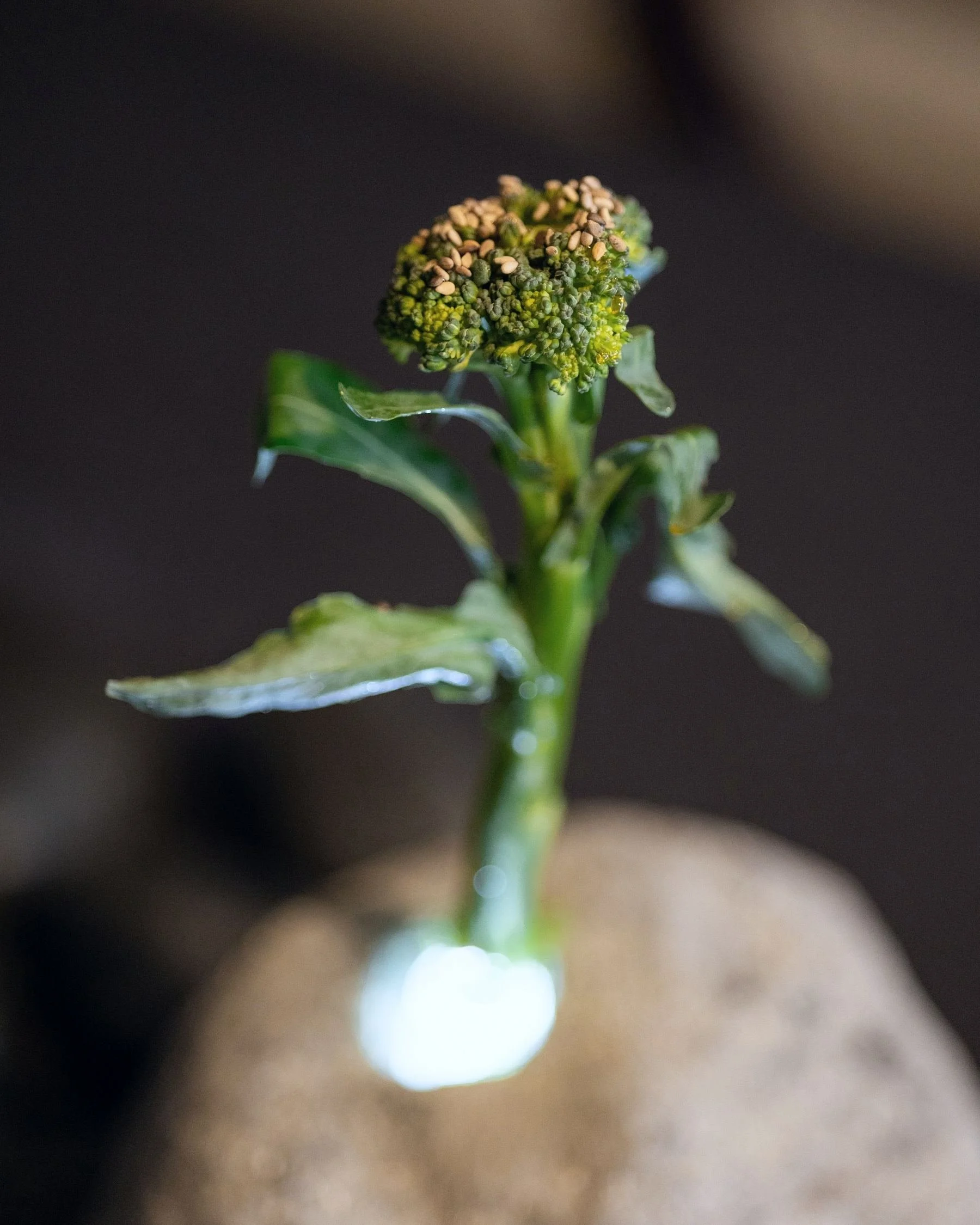
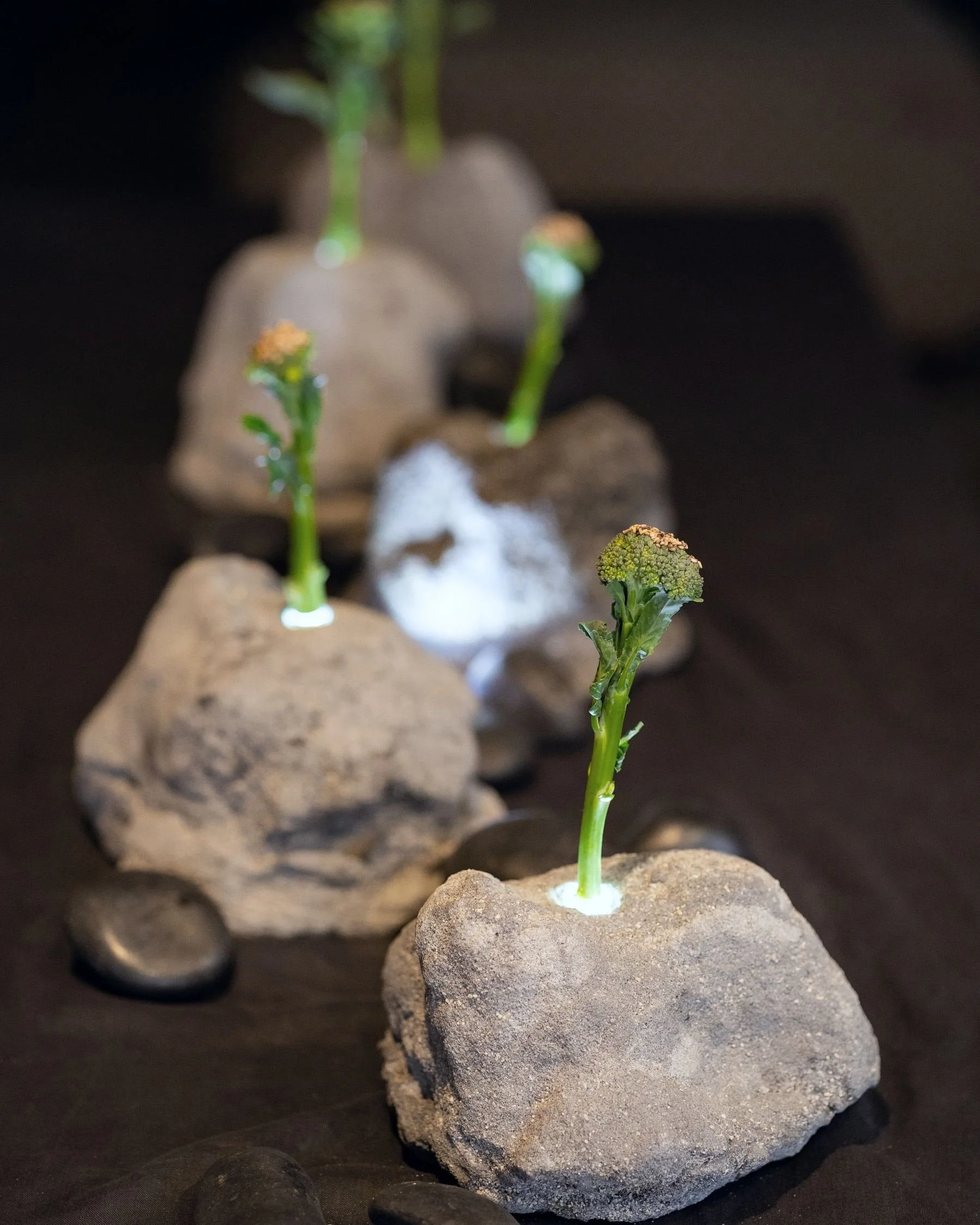
Vessels were cast by hand in concrete for this work alone. Casting as thinking begins in reverse: form arrives from the space around it. Set into each one, a glass tube held the broccolini upright. Concealed below it, light rose from inside the vessel. None of it existed before the work required it. Making what cannot be found belongs to the practice. Where the mould was not corrected, the surface stayed rough. Roughness was kept as a record of making. Dark river stones gathered at each base, finished long ago by water. Further shaping would have been an intrusion.
Broccolini stood upright in each vessel. Up close, it read as vegetable. Across the room, it read as growth from the sea floor. Garden and sea floor traded places depending on where one stood. Green held its colour while the room around it stayed dark. Resemblance was intended, never left to chance.
Lighting avoided anything theatrical. Moving light came from the projection; still light came from within the vessels. Separate tasks kept them from competing. Shadows were allowed to fall where they wanted. Darkness carried as much of the composition as anything lit. For immersive installation art, unlit parts of a room are rarely empty.
Black recurs by decision. Linen and river stones shared a tone, and neither competed with the vessels. Colour was permitted sparingly: the green under its light, and the glass. Curated absence held everything else.
Inhabited, Not Observed
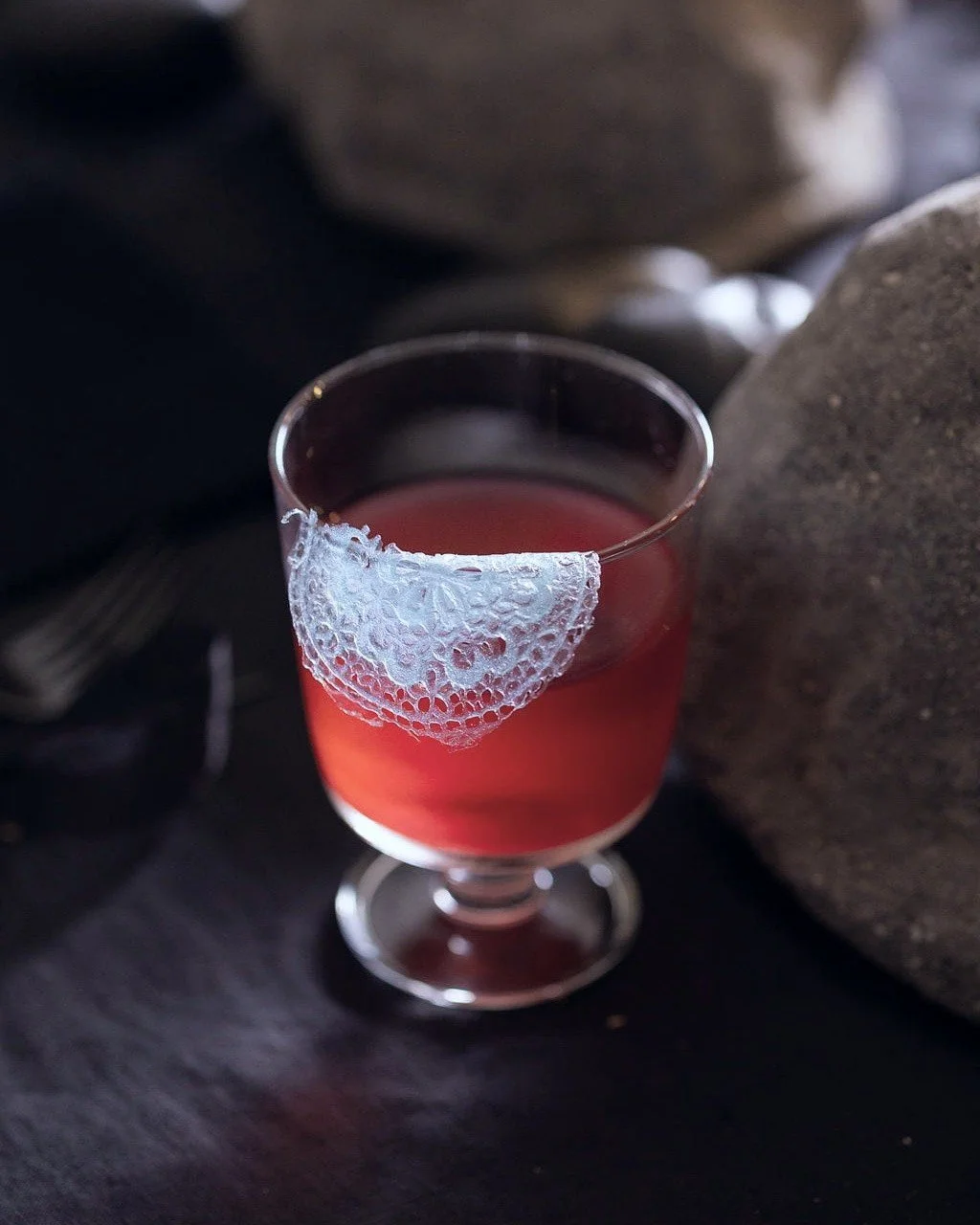
Red gave the elixir its depth. Pale blue lace met it at the rim. Its blue was matched to the projected sea, not to the drink. Sea entered the glass by colour alone. Sight came before taste, in the same order the glass was composed. Only the glass was meant to be finished. Consumption completed the colour rather than ending it.
Fragile lace marked the rim of every glass. Placed where lips meet glass, it existed only until contact. From afar, it read as foam at the edge of a wave. Pattern appeared only close up. Gone in a moment, it marked the exact point where looking turned into tasting.
Projected water moved across the wall all evening. Equal in weight to concrete and linen, it was never backdrop. Room and shore lost the line between them. Multisensory by nature, the work let sight, temperature and taste arrive in turn. Proximity changed what each of them meant.
Unlike the glass, the vessels were never meant to be emptied. Permanence and consumption shared the room without touching. Whatever could be eaten disappeared; whatever could not became the record. Memory of the evening now rests in concrete.
Endings on a shore are quiet. Warmth stays in concrete for a while after a room empties. By the end of the evening, what remained was concrete, cooling, and stones that had seen this happen before. Within the practice of Veceto, immersive installation art returns to one question. What does a place hold before anyone arrives, and what may be set down for a single evening without disturbing it?
Shorelines differ, and so do the immersive brand experiences built around them.